Start Planning · Province & region guide
Sichuan: Tea in the Basin, Blue Water in the Mountains
A relaxed afternoon in Chengdu and a cold morning in a high valley can belong to the same Sichuan journey. Understanding the divide between basin and mountains is the key to enjoying both.

Chengdu is the provincial capital and the easiest base for a first visit. The fertile Sichuan Basin has long supported dense settlement and rich food traditions, while western and northern areas rise into very different terrain and cultural settings. Do not use Chengdu's weather forecast for every place on a province-wide itinerary.
Begin with the living city
Chengdu Panda Base is a research and visitor facility where the animal-viewing experience depends on weather, activity, and the open enclosures. Arrive with realistic expectations: pandas are not performing on demand, and a photograph of a cub does not guarantee that young animals will be visible. Follow the facility's rules and allow time for walking. A visit pairs well with an afternoon in a park, not necessarily a second major excursion outside the city.
People's Park introduces Chengdu's teahouse culture. Order tea, settle into a chair, and notice how conversation, chess, and quiet observation fill an afternoon. Ear-cleaning services and tourist activity may be present, but they are optional and not the essence of the tradition. Wenshu Monastery and its surrounding streets add religious life, vegetarian dining, and everyday shops to the picture.
Chengdu hotpot streets are less one official attraction than an invitation to explore dining neighborhoods. The red broth's chili and Sichuan pepper create heat and a tingling sensation; mixed or mild broths offer alternatives. Ask what the restaurant actually means by mild, cook raw ingredients properly, and order gradually. You can enjoy the city's food without making every meal a spice endurance contest.
Water engineering and a giant Buddha
Dujiangyan's historic irrigation system explains something fundamental about the basin: managing water helped support agriculture and cities. Walk the managed site with enough interpretation to understand how the diversion works. Nearby Mount Qingcheng adds a forested Taoist landscape, but the two visits require separate time and walking effort.
The Leshan Giant Buddha was carved beside a river confluence. Its immense seated figure has a practical and devotional setting associated with river navigation and Buddhist patronage. A land visit brings you close to the site and its surrounding temples; a boat view shows the whole figure but depends on water and operating conditions. Choose based on your interests and check which routes are open.
Mount Emei is a further journey, with monasteries, forests, and high viewpoints. It is not just a cableway ride following lunch at Leshan. A longer stay allows the landscape and religious sites to unfold, while an abbreviated visit should be explicit about what it leaves out.
Jiuzhaigou is a valley system, not one blue pool
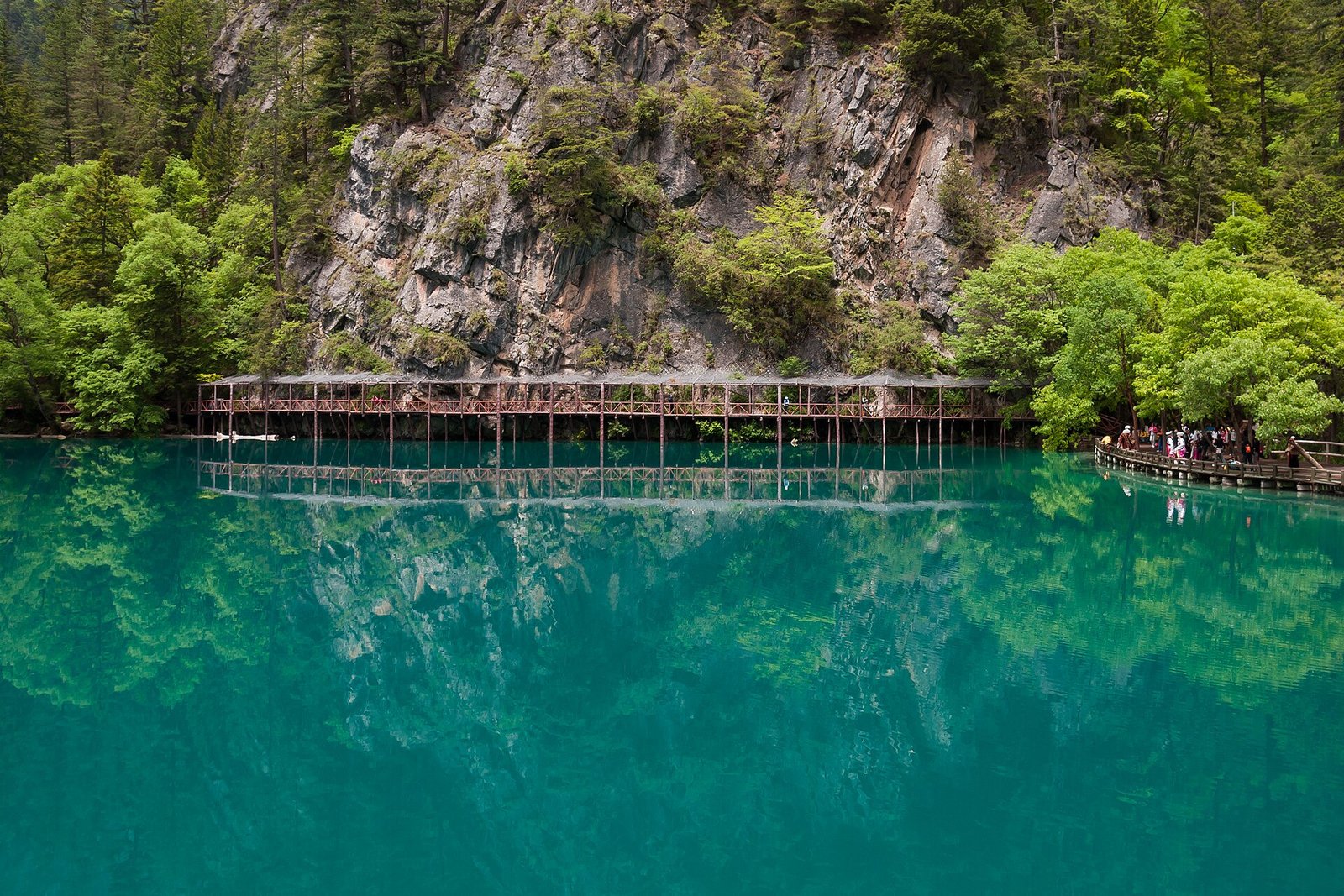
Jiuzhaigou Valley combines lakes, waterfalls, forest, and Tibetan village history in a managed scenic area. The mineral-rich waters and changing vegetation create memorable colors, but weather and season alter the appearance. Internal buses and boardwalks determine how you move through the valleys. Allow a full visiting day and travel time on either side rather than counting the transport day as a complete sightseeing day.
Huanglong's travertine pools are a separate high-elevation destination. Their terraced forms differ from Jiuzhaigou's lake landscapes. Both involve mountain conditions and possible altitude concerns. Confirm current rail, road, shuttle, and admission arrangements; reaching a railway station named for the area does not mean stepping directly into the park.
Older Sichuan beneath the familiar images
Sanxingdui Museum near Guanghan introduces the extraordinary bronzes and archaeological world of ancient Shu. Its masks and figures challenge the assumption that early Chinese cultures all looked alike. Give the exhibits time and use the current reservation process. Zigong's salt-industry history and distinctive dining offer another less obvious extension, while western Sichuan's Tibetan and Qiang communities require geographically focused routes rather than a generic cultural detour.
Alongside hotpot, look for mapo tofu, dan dan noodles, twice-cooked pork, and dishes that use garlic, pickled vegetables, or gentle broths. Sichuan cuisine has far more than one flavor. A teahouse conversation or neighborhood market often explains Chengdu's reputation for relaxed living better than a slogan; working lives and individual temperaments still vary.
The basin has hot humid summers, often damp winters, and rain across much of the warmer season. Mountain nights can be cold, and high routes need layers even in summer. A balanced first journey gives Chengdu several days, chooses Leshan or another nearby extension, and adds Jiuzhaigou only with enough time for the transfer and mountain setting. Sichuan works best when its contrasts have room to breathe.