Start Planning · Province & region guide
Fujian: Earth Houses Inland, Maritime Stories on the Coast
Fujian's mountains and coastline created different kinds of connection. Inland communities built substantial earthen houses; coastal cities traded across the sea; tea landscapes developed their own traditions of cultivation and taste.
Fuzhou is the provincial capital, while Xiamen is a major visitor base. Tulou areas, Wuyi Mountain, Quanzhou, and Xiapu lie in different directions. Choose a coastal route, a tea-and-mountain journey, or enough time to link selected areas without constant backtracking.
Fujian Tulou: enter a shared architectural world
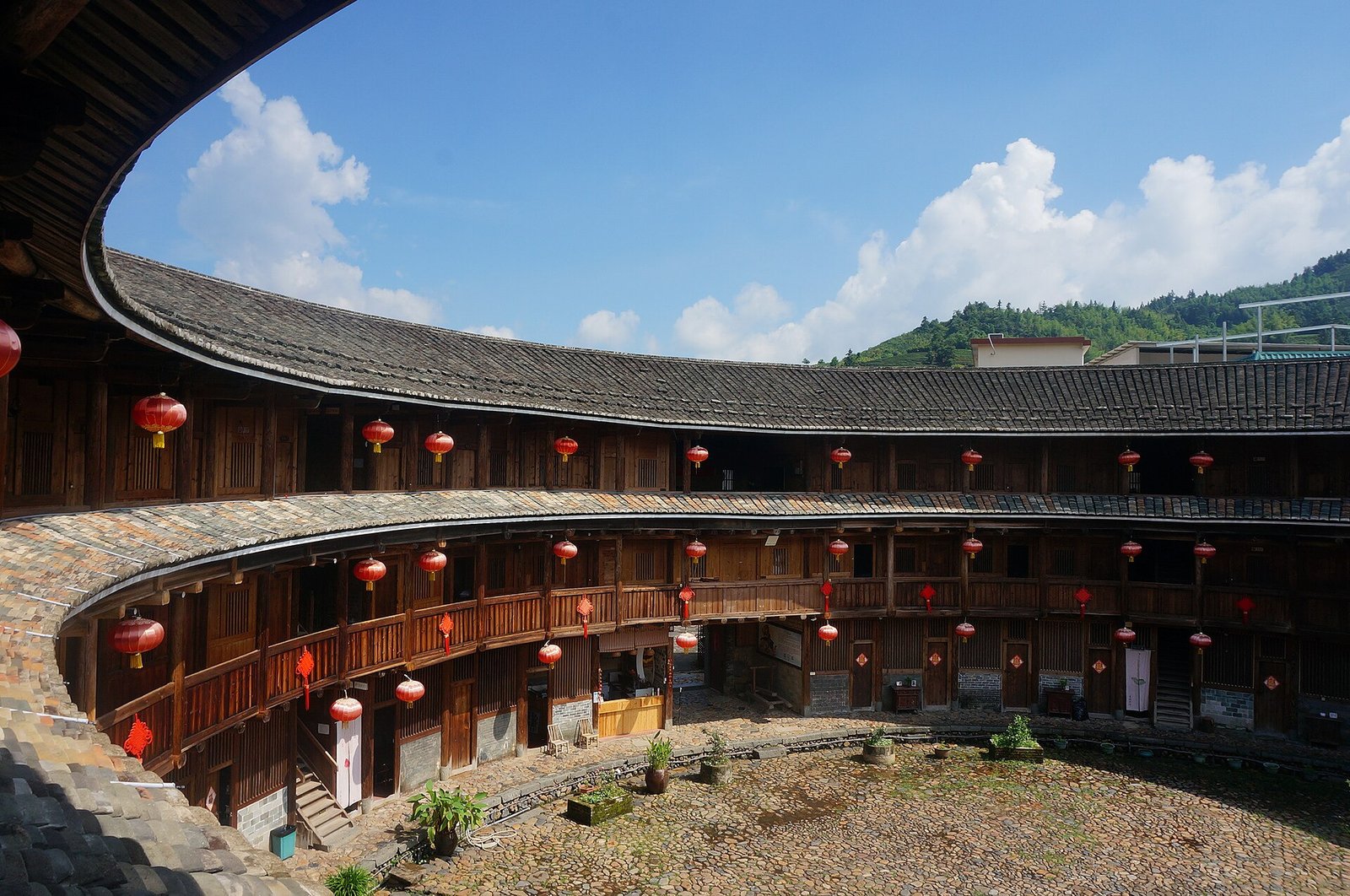
Fujian Tulou are large earthen buildings in the province's mountainous southwest, with round, square, and other forms. They are associated with communal living, family organization, and protection, not simply an unusual aerial shape. Hakka and other local communities have built and used tulou; it is too simplistic to label every building and resident identically.
Clusters such as Tianluokeng, Hongkeng, and Gaobei have different travel and visitor arrangements. Pick a cluster or a coherent nearby combination rather than attempting all of them on a rushed excursion from Xiamen. Inside, notice how shared courtyards, household spaces, and ancestral functions fit together. Some residents still live there. Public entry does not imply permission to climb private stairs or photograph household interiors.
A guide can explain which parts are old, repaired, or adapted to tourism. Overnight accommodation can offer quieter hours, but confirm comfort, transport, and meal arrangements rather than assuming every historic building is a hotel.
Gulangyu is more than an island photograph
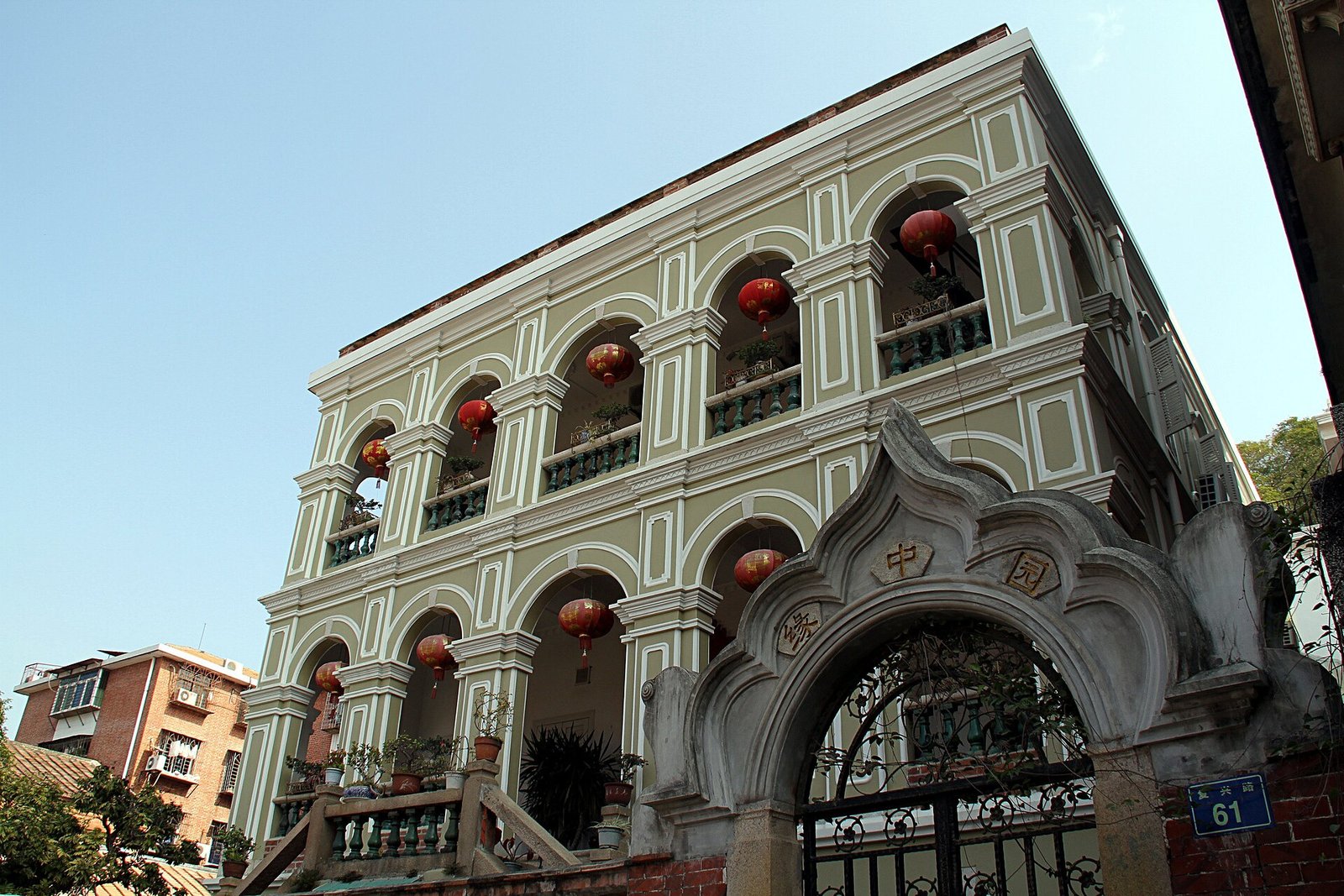
Gulangyu Island sits off Xiamen and contains a distinctive built environment associated with international maritime exchange. Former consular and residential buildings, gardens, religious sites, and musical traditions provide a layered walk. The island's interest is architectural and cultural, not a promise of deserted beaches.
Book the appropriate ferry through current official arrangements, with the correct passenger terminal and identification. Routes for visitors and residents may differ. Carry only luggage you can comfortably manage on foot and allow time for crowds. Sunlight Rock, gardens, and museum visits can add depth, but a slower street walk is equally valuable. The Haoyue Garden's Zheng Chenggong statue is a prominent landmark, while the city's history continues across the water in Xiamen's neighborhoods.
Wuyi Mountain: rocks, water, and tea knowledge
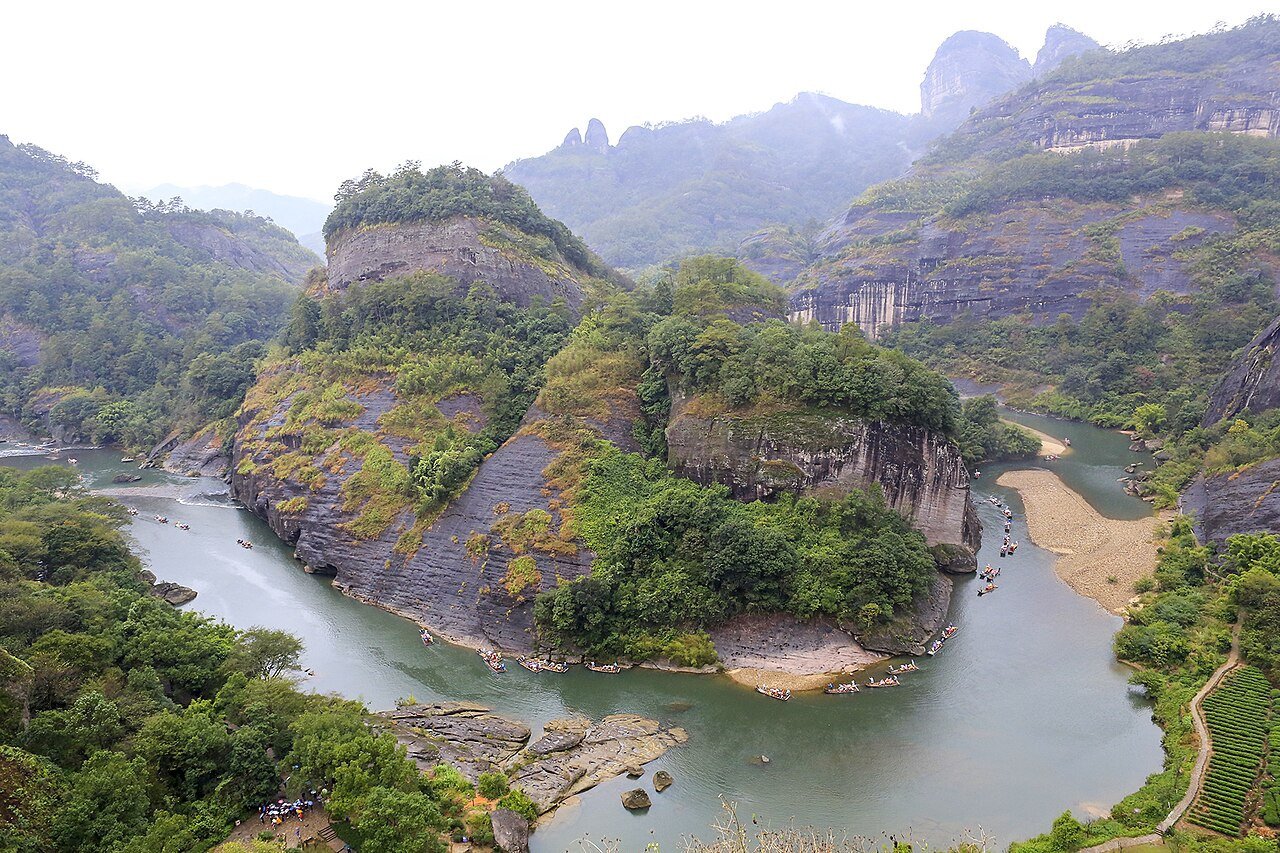
Wuyi Mountain combines striking landforms, the Nine-Bend Stream, ecological value, and a strong cultural history. A regulated bamboo-raft journey, when operating, introduces a water-level view; mountain paths give a different perspective. Weather, water conditions, and ticket arrangements should determine the plan rather than a fixed expectation of doing every route in one day.
Wuyi rock tea is an oolong tradition shaped by particular growing environments and skilled processing. A tasting can explain aroma, roasting, and repeated infusions more clearly than a large souvenir purchase. Ask what tea is being served, where it was grown, and whether you are visiting cultivation, processing, or retail. A label invoking a famous cliff does not by itself establish provenance.
Quanzhou and Xiapu show the working coast
Quanzhou's heritage sites introduce a major maritime trading city during the Song and Yuan periods. Kaiyuan Temple, Qingjing Mosque, historic bridges, and other sites show different institutions connected with trade and urban life. Each has its own rules and religious context. A well-planned route with interpretation makes the city's international history more tangible than a generic claim that it was cosmopolitan.
The Xiapu coast is known for tidal flats, aquaculture, boats, and changing patterns of light. Tide timing matters as much as sunrise. Many celebrated photographs show working marine landscapes, not beaches for swimming. Use appropriate viewpoints, respect fisheries and private working areas, and do not assume a beautiful scene is accessible from any shoreline road.
Fuzhou's Sanfang Qixiang district offers another urban architectural history, while museums and local food streets keep the provincial capital from becoming merely a transit stop.
A coastal kitchen with regional differences
Fujian food includes seafood, soups, fermentation, and aromatic preparations, but Fuzhou, Minnan, and Hakka-associated cooking are not one identical menu. Fuzhou fish balls often contain a filling; Minnan oyster omelets and satay-style noodles offer other textures. Buddha Jumps Over the Wall is a substantial banquet-associated dish, not a necessary everyday order. Clarify ingredients if shellfish, meat, or alcohol is a concern.
Southern Fujian language traditions, temple festivals, opera, and overseas family connections give cultural life particular depth. Seek specific local explanations rather than imagining every coastal town follows the same customs.
The climate is generally humid, with hot summers, substantial rain, and tropical-storm risk along the coast; northern mountain areas are cooler. Spring and autumn can suit a mixed journey, with weather flexibility for boats and mountain paths. Give one inland world and one coastal world enough time. Their contrast is the province's strongest introduction.