Stories · Time & geography
One Clock, Very Different Sunsets
Two cities, one official clock, very different daylight. Discover why a late sunset in western China can feel surprisingly out of step with your watch.
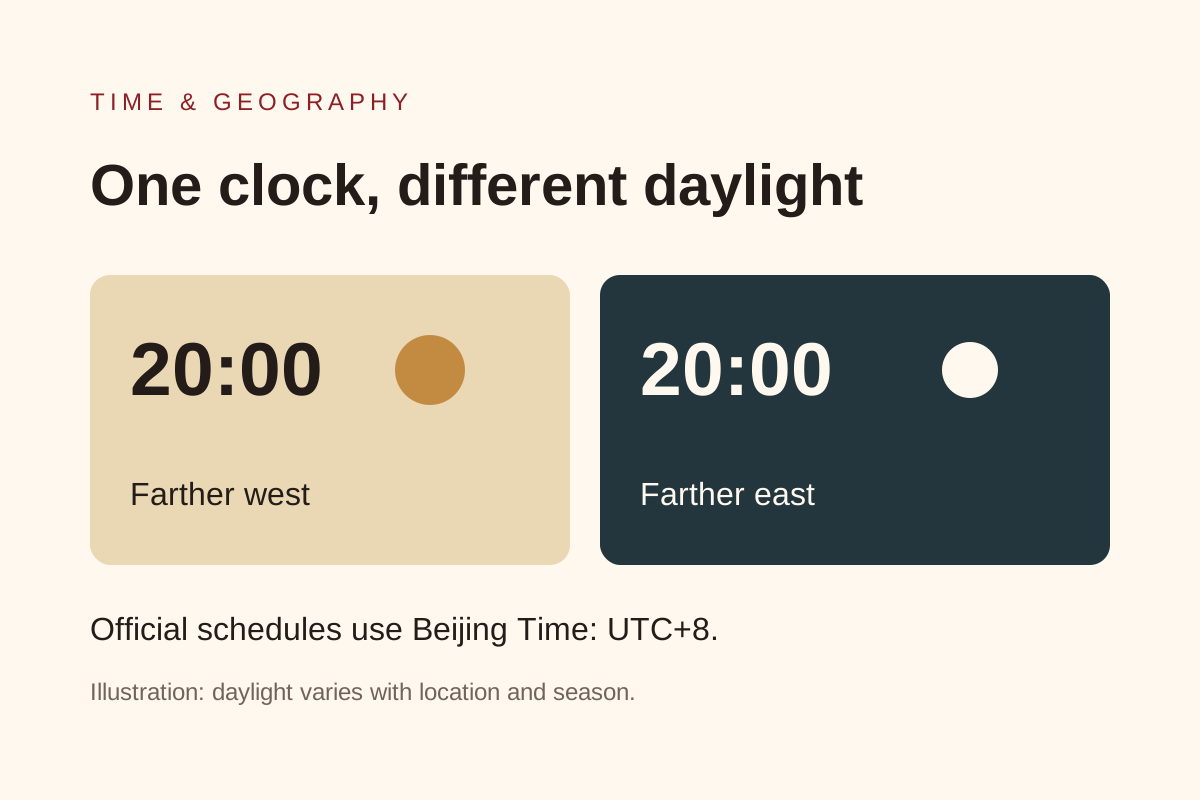
You arrive in western China and find that an hour associated with darkness elsewhere can still have daylight. Your watch is working. The sun’s position and the official clock answer different questions, and a country with a wide east–west span makes that difference visible.
Longitude, season, and the same official watch
Mainland China uses one official time zone, UTC+8, commonly called Beijing Time. The clock supports schedules and national coordination. Solar time, however, depends on longitude; places farther west experience the sun’s daily progression later by that same official clock.
Latitude and season also affect daylight length. A late sunset in summer cannot be explained by longitude alone, and two places on similar longitudes can still have different days. A mountain horizon or a building may hide the sun before the published astronomical sunset.
For a photograph or outdoor outing, check the actual daylight information for the town and date. For a booked train, keep the official ticket time. Solar observation and transport scheduling can coexist once you stop asking one clock convention to describe both.
Make the meeting time clear
In some western local contexts, people may discuss an additional local time convention. That makes an apparently simple appointment worth clarifying. Ask whether a stated time means official Beijing Time, and use the time printed on a booked train or flight rather than converting it on your own.
The clock does not dictate when a neighborhood eats or becomes lively. Watch actual opening hours and local routines, and allow your body time to adjust. Once you separate shared scheduling from the moving sun, an unusually bright evening becomes understandable rather than evidence that the itinerary is wrong.