Stories · Symbols & time
Chinese Zodiac: A Year, Not a Month
Find your Chinese zodiac animal from your birthday, then discover the calendar behind it and the cultural meanings of all twelve animals.
A birthday, a calendar, an animal
Find your Chinese zodiac animal
Choose your Gregorian (solar-calendar) birth date. We check which Chinese lunar year it falls in. You do not need to convert the date yourself.
Your place in the twelve-year cycle
Explore your animal’s symbolism →This finder uses the Spring Festival / first lunar day convention. Some traditional astrology uses Li Chun (Beginning of Spring) instead; that can produce a different result near the year boundary.
Which calendar decides your animal?
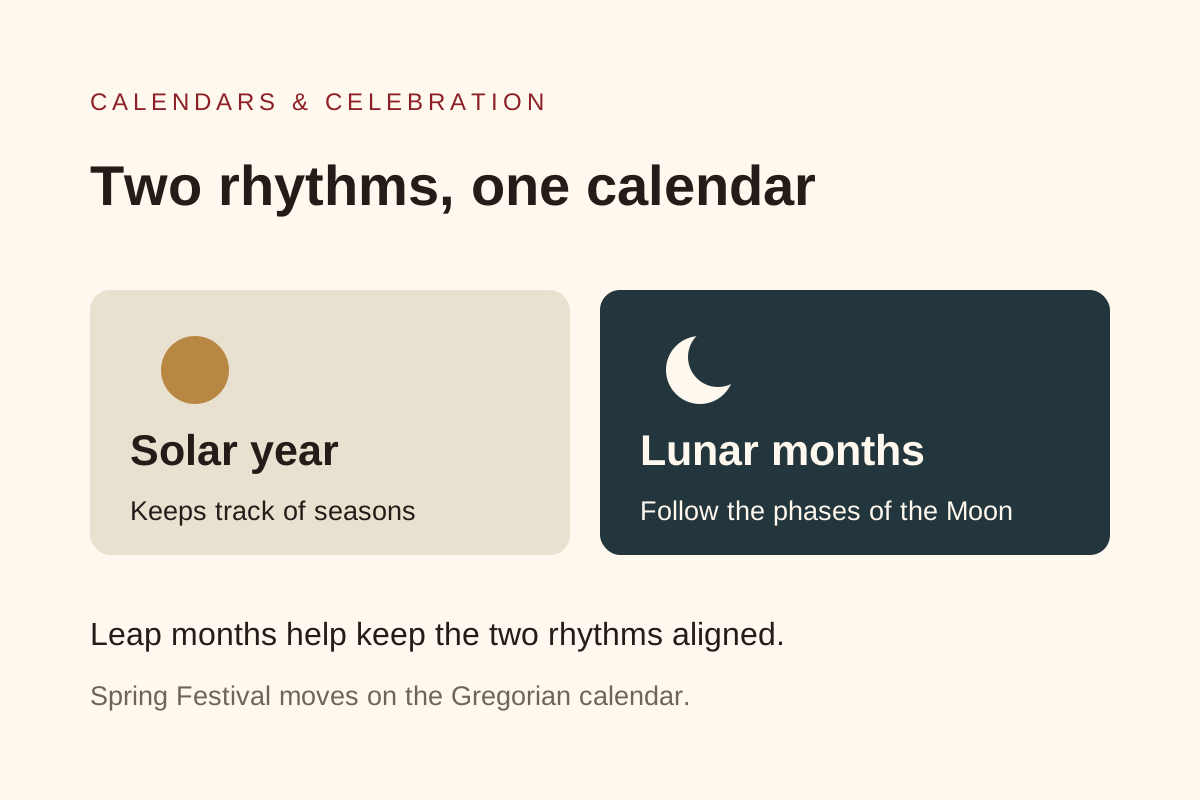
Use your Gregorian birth date in the finder above. The animal belongs to the Chinese lunar year containing that date, rather than automatically to the Gregorian year printed on your document. The traditional Chinese calendar is lunisolar: lunar months are kept in step with the solar seasons through its calendrical rules.
This finder uses the first day of the first lunar month—Chinese New Year, also called Spring Festival—as the changeover. A birthday before that day belongs to the preceding animal year; a birthday on the day begins the new animal year. For example, 9 February 2024 belongs to the Rabbit year, while 10 February 2024 begins the Dragon year.
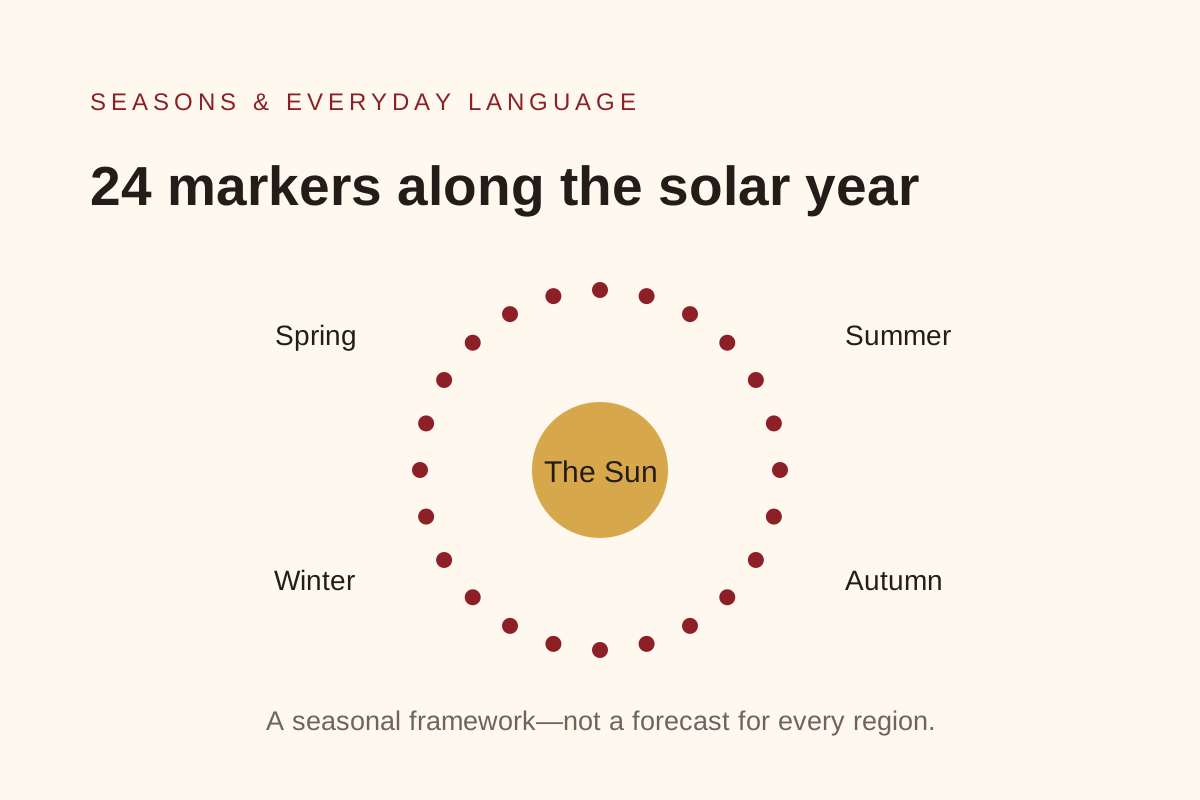
Some BaZi and other traditional astrological practices use Li Chun, the solar term Beginning of Spring, for the year-pillar boundary. That convention answers a different kind of lookup and may give a different result for a birthday between the two boundaries. This page consistently uses the Spring Festival convention, following the calendar-year approach used in the Hong Kong Observatory’s published tables. It is not a birth-time or BaZi calculation.
One repeating cycle, twelve different images
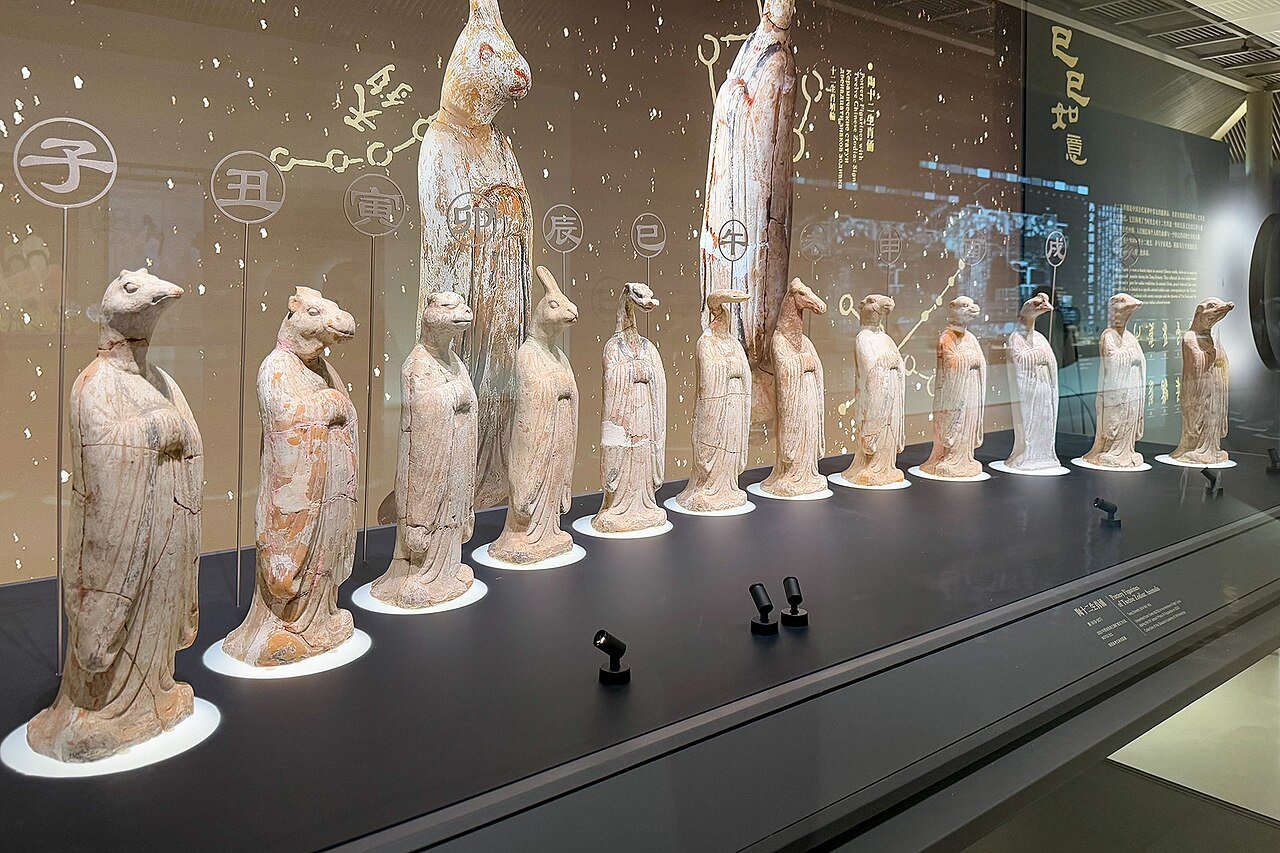
The order is Rat, Ox, Tiger, Rabbit, Dragon, Snake, Horse, Goat or Sheep, Monkey, Rooster, Dog, and Pig. After twelve years the same animal returns, so people a generation apart can share a sign. The animal alone cannot tell you someone’s age.
An animal year can become part of a holiday greeting, a gift, or a decorative object. Your own zodiac year is often called benmingnian; some households mark it with red items or other customs, while others do not. The familiar animal-race tale has different versions and should be read as a legend, not a documented origin of the calendar.
How to read the animals’ meanings
The descriptions below introduce common symbolic associations and the stories or everyday observations that make them memorable. Meanings vary across periods, regions, families, and individual objects. They are neither a single official personality system nor predictions about your future.
A tiger on a child’s shoe may express protection, while a horse on a gift can wish someone success. Start with the object and the occasion before assigning a meaning. Zodiac symbols become more interesting when you ask what a person is wishing for, rather than what a birth year supposedly proves about them.
Meet the whole cycle
The twelve animals and their symbolism
Explore the common associations below. These are cultural images and wishes, not tests of personality or predictions about an individual.
鼠
Rat
Resourcefulness and quick thinking
Small but alert, the rat often represents the ability to find a way through difficulty. In the familiar zodiac race legend, it wins through ingenuity rather than strength. Read that as a story about cleverness, not a verdict on people born in its year.
牛
Ox
Diligence and dependability
The ox evokes patient effort and the agricultural work that sustained households. Its strength is steady rather than theatrical. In festive imagery, it can express respect for hard work and the wish that sustained effort will bear fruit.
虎
Tiger
Courage and protection
The tiger’s power makes it a familiar image of bravery. Tiger-themed clothing and objects can also carry protective wishes, especially around children. A tiger motif may therefore express care and strength rather than an invitation to be aggressive.
兔
Rabbit
Gentleness and alertness
The rabbit brings a softer image to the cycle: a quiet creature that remains attentive. Chinese moon stories also feature a jade rabbit, adding another layer when rabbits appear in festival art. A zodiac rabbit and a moon rabbit share an animal without always sharing the same context.
龙
Dragon
Vitality, auspicious power, and good fortune
The dragon is the cycle’s only mythical creature. In Chinese imagery it can connect with rain, prosperity, authority, and auspicious wishes. The meaning depends on the object: an imperial robe, a festival dragon, and a modern New Year decoration tell different stories.
蛇
Snake
Wisdom and adaptability
Popular zodiac descriptions often associate the snake with observation and considered action. Its changing skin also lends itself to ideas of renewal. Chinese stories give snakes varied roles, so the animal should not be assigned one simple moral identity in every setting.
马
Horse
Energy and forward movement
The horse evokes movement, endurance, and the desire to make progress. The expression mǎ dào chéng gōng links a horse’s arrival with success. A horse on a gift can therefore be a wish for a promising start, not merely a description of someone’s temperament.
羊
Goat / Sheep
Harmony and kindness
Yáng can be translated as goat, sheep, or ram; English wording varies without changing the zodiac position. The animal often conveys a gentle, harmonious image. Its appearance in auspicious designs also connects it with wishes for favorable beginnings rather than a single fixed personality type.
猴
Monkey
Inventiveness and playful intelligence
The monkey’s agility offers an image of flexible thinking. Sun Wukong, the Monkey King in Journey to the West, adds a famous literary association, but not every monkey image depicts that character. Look for the object’s own details before assuming it tells his story.
鸡
Rooster
Watchfulness and punctuality
A rooster announcing the morning makes a natural symbol of alertness and dependable timing. Its proud stance also gives decorative art a strong silhouette. Popular zodiac descriptions build on these associations, while particular artworks can carry additional wishes or wordplay.
狗
Dog
Loyalty and guardianship
The dog’s relationship with people makes companionship and protection familiar associations. In zodiac conversation, loyalty is often the quality emphasized. This is a cultural image of a trusted companion, not evidence that everyone born in a Dog year behaves in the same way.
猪
Pig
Abundance and contentment
The pig often evokes material plenty, well-being, and an unhurried enjoyment of life. In an auspicious setting, its rounded form can express a wish for a comfortable household. That favorable reading differs from dismissive stereotypes attached to the animal in other contexts.