Stories · Calendars & celebration
Why New Year Moves Around the Calendar
Spring Festival never seems to stay on the same date. The reason lies in a calendar that follows both the Moon and the seasons.
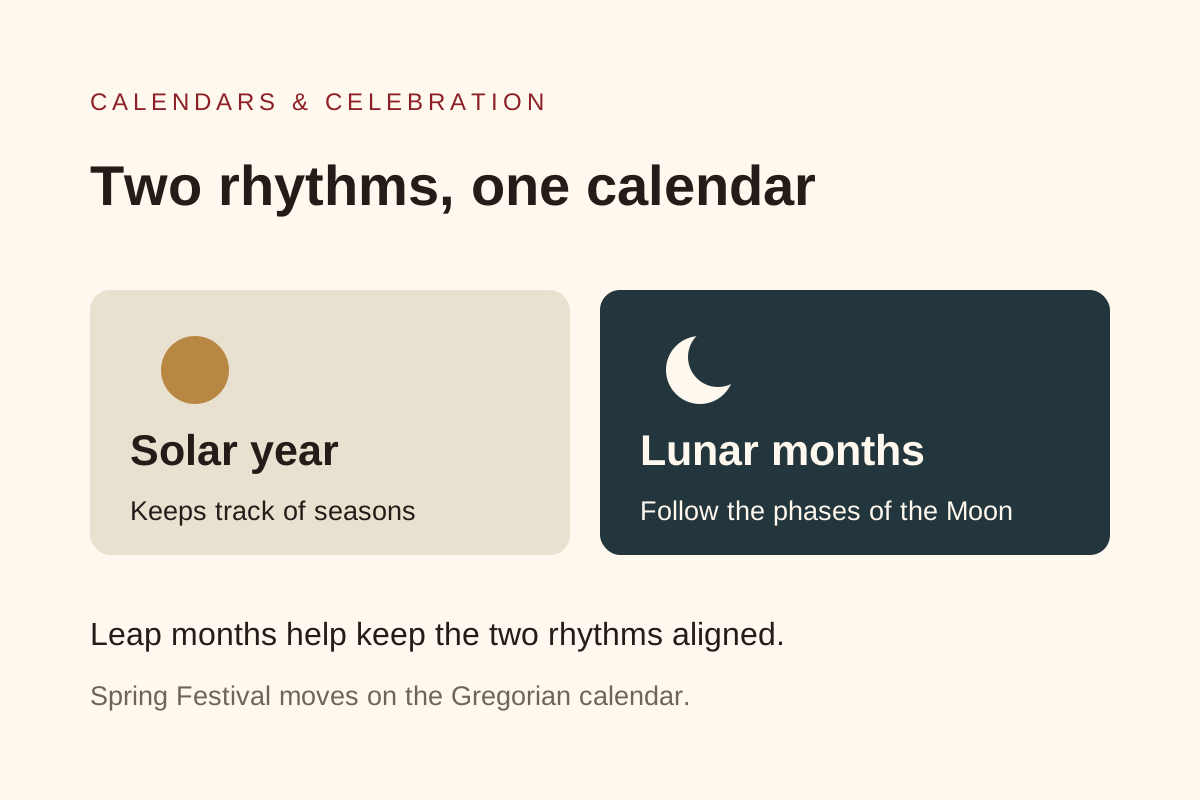
A friend’s Spring Festival plans fall in January one year and February another. The holiday has not moved randomly. It follows the traditional Chinese calendar, while your everyday calendar displays dates according to the Gregorian system.
Lunar months kept in step with the sun
The traditional calendar is lunisolar: months track the moon, while adjustments keep the calendar connected to the solar year and seasons. Twelve lunar months are shorter than a solar year. An additional month is inserted in certain years so the seasonal relationship does not drift endlessly.
A leap month is not the same thing as the extra February day in a Gregorian leap year. Both are ways of keeping a calendar useful, but they solve different mismatches. Calling the traditional system simply a lunar calendar is common shorthand; lunisolar describes its structure more accurately.
The apparent moving date becomes less mysterious when you write both calendar dates beside each other. One system shows the first day of a traditional month; the other expresses the same day with its own month and number. The event is not changing its definition each year.
One fixed place in two different calendars
Spring Festival begins the first traditional lunar month. Its Gregorian date therefore changes, even though its place within the traditional calendar remains defined. Mid-Autumn Festival and several other observances use traditional month-and-day dates too, but not every Chinese holiday follows the same calculation.
For a journey, distinguish the festival date from the official public-holiday schedule, which may include adjusted working days. Consult the announcement for the actual year. What looks like a moving celebration is a meeting point between two orderly systems of counting time.