Stories · Seasons & everyday language
Twenty-Four Seasons? A Different Way to Read the Year
Grain Rain, White Dew, Spring Equinox: these poetic names mark a practical way of reading the year. What do the twenty-four solar terms actually measure?
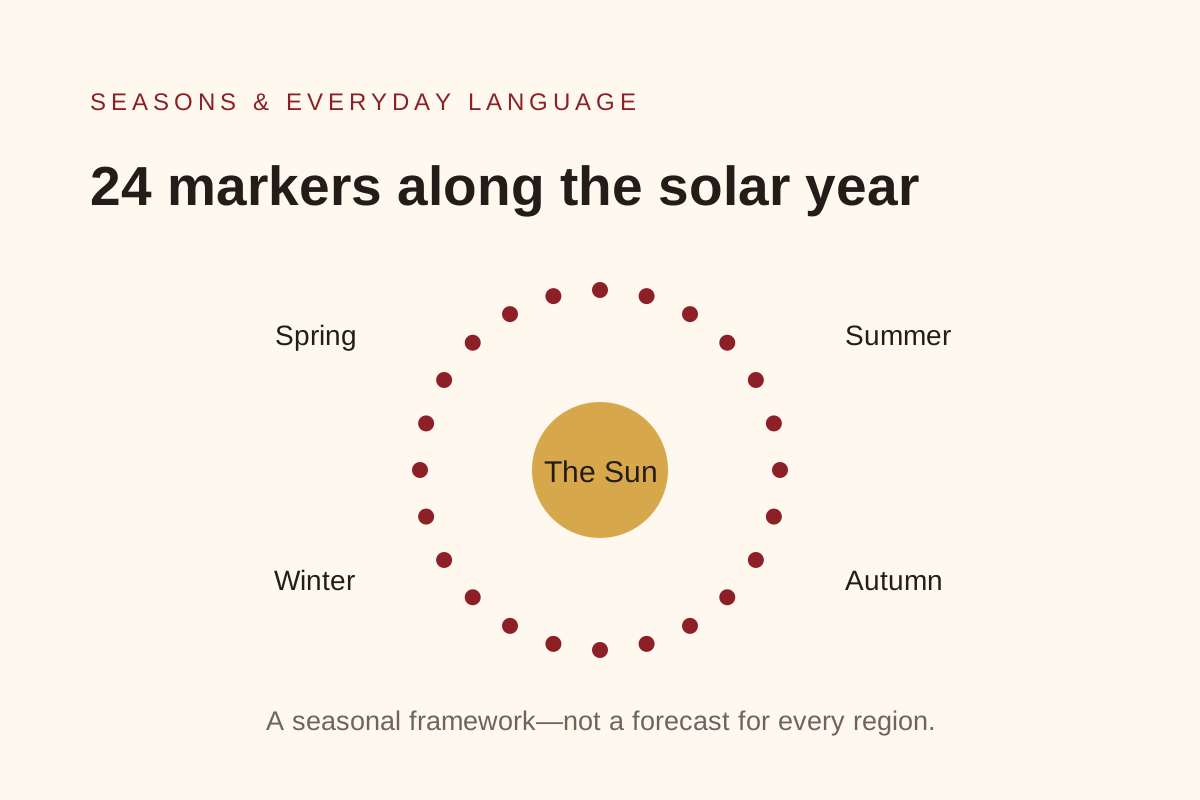
Rain Water, Grain Rain, White Dew: the names of the twenty-four solar terms sound more like observations than numbered dates. They divide the sun’s annual cycle into smaller markers and connect time with changes people can watch in the landscape.
The sun marks transitions, not twenty-four lunar months
The solar terms are based on the sun’s position along its apparent annual path, so their Gregorian dates are relatively stable compared with lunar festivals. They belong to the broader traditional calendrical system, but are not twenty-four lunar months or twenty-four separate weather forecasts.
Names reflect seasonal and agricultural understandings developed in historical settings. A term describing frost does not guarantee frost in every Chinese province that day. China’s climates differ greatly, so southern coastal weather and a northern farm may experience the same calendar marker quite differently.
A food shop may mention a solar term as a seasonal association, not a guarantee that the ingredients were harvested that exact day. Ask what is locally in season. The calendar marker becomes a starting point for noticing a place rather than a rule that every province must obey.
Ask what changes here, at this point in the year
Today you may encounter the terms on a calendar, in a food promotion, a poem, or a conversation about seasonal habits. Some families observe associated practices while others hardly notice the date. Their cultural presence persists without requiring every person to follow an agricultural routine.
Use a solar term as a question rather than a promise: what changes here at this time of year? Ask about local produce, flowering, rain, or work in the fields. The revealing idea is that a year can be read through transitions in ordinary surroundings, not only through major celebrations.