Stories · Language & local life
“Chinese” Does Not Mean Everyone Sounds the Same
A family switches from Mandarin to speech you barely recognize. Why can conversations sound so different across the same country?
A shop sign remains recognizable as you travel, while the conversation beneath it sounds very different. That experience reveals a distinction often hidden by the English word Chinese: a shared writing tradition does not mean every person uses the same speech at home.
A common language alongside local voices
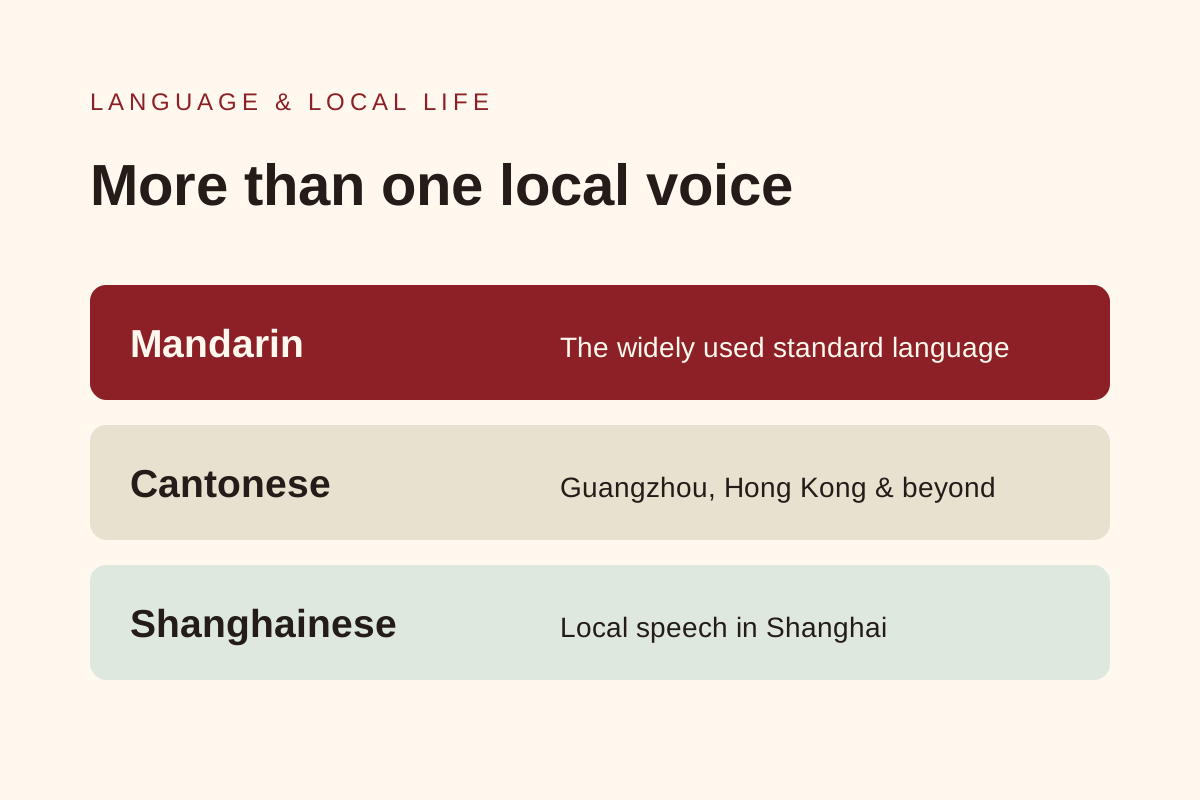
Putonghua, commonly called Standard Mandarin in English, supports communication across regions and is widely used in education and public settings. It coexists with regional varieties such as Cantonese, Wu varieties, and others, as well as the languages of China’s many ethnic communities.
Regional speech varies in sounds, vocabulary, and grammar. Some varieties are not mutually intelligible, and the boundary between a language and a dialect can involve more than a linguistic measurement. Calling a variety a dialect does not mean its speaker can automatically understand every other regional variety.
A public announcement and a family conversation can share the same place while using different registers or regional varieties. Listen for that change without assigning a social rank to the voices. Local speech can carry familiarity that a nationwide announcement is not trying to express.
The switch you hear between a station and a family table
A person may switch between local speech, Standard Mandarin, and another language depending on whom they are speaking to. That switching can signal familiarity, age, education, migration, or simply convenience. A restaurant conversation between relatives can therefore sound unlike the announcement you heard on the train.
For visitors, a few Standard Mandarin phrases are a useful start. If someone introduces a local expression, ask how and when it is used rather than describing the pronunciation as incorrect. The interesting discovery is that communication across China works through a repertoire of voices, not the disappearance of local ones.