Destinations · Sichuan
Leshan Giant Buddha
A huge seated Buddha carved into riverside cliffs shows the scale of Tang dynasty religious art.
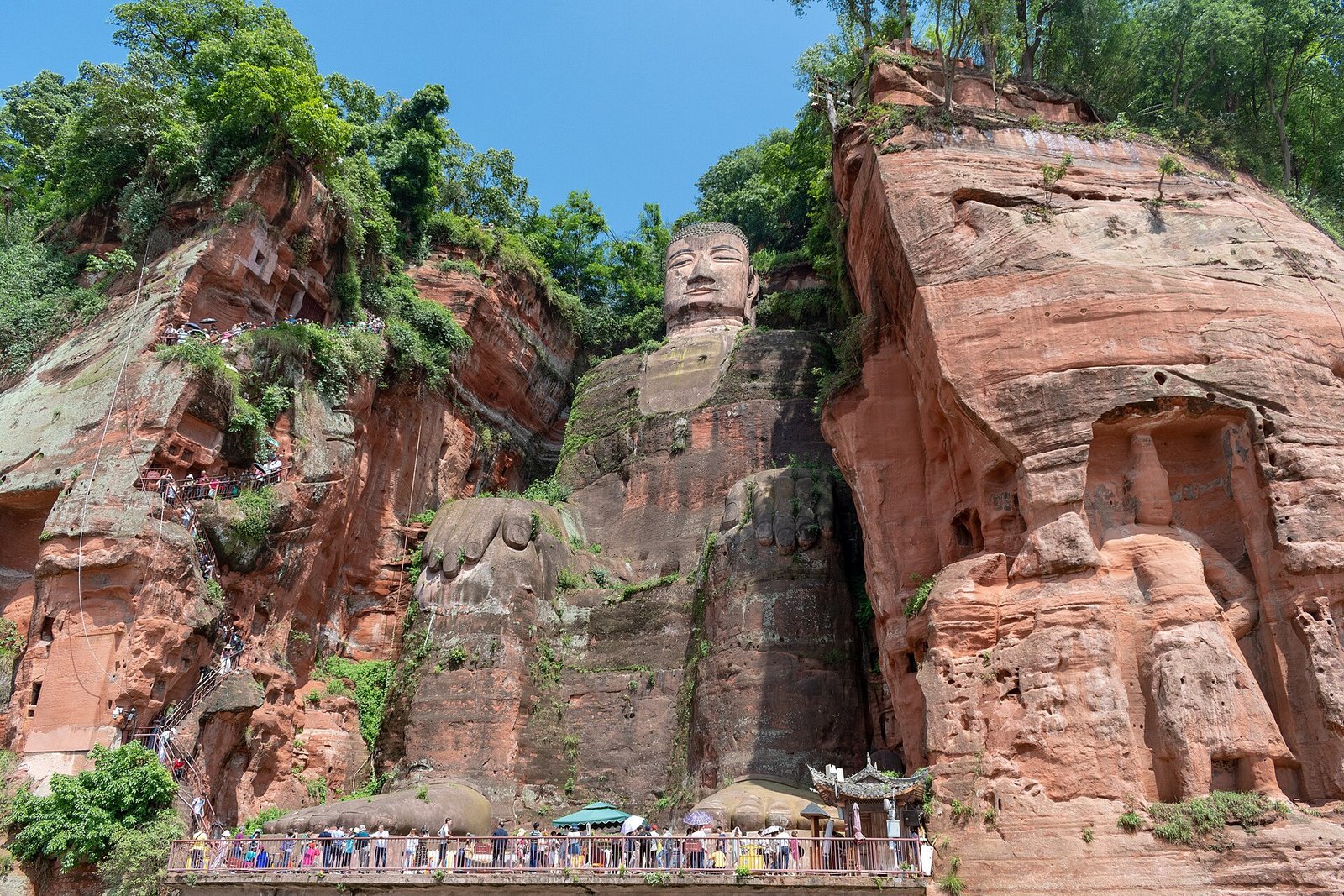
The seated Buddha is carved into a riverside cliff at Leshan in Sichuan, near the meeting of major waterways. It forms part of a World Heritage property that also includes Mount Emei, which is a separate destination.
Construction began in the eighth century during the Tang period and continued over decades. The figure is identified with Maitreya, the future Buddha. The undertaking belongs to a history of Buddhist patronage and the relationship between religious monuments and river communities.
Choose your view: cliff route or river perspective
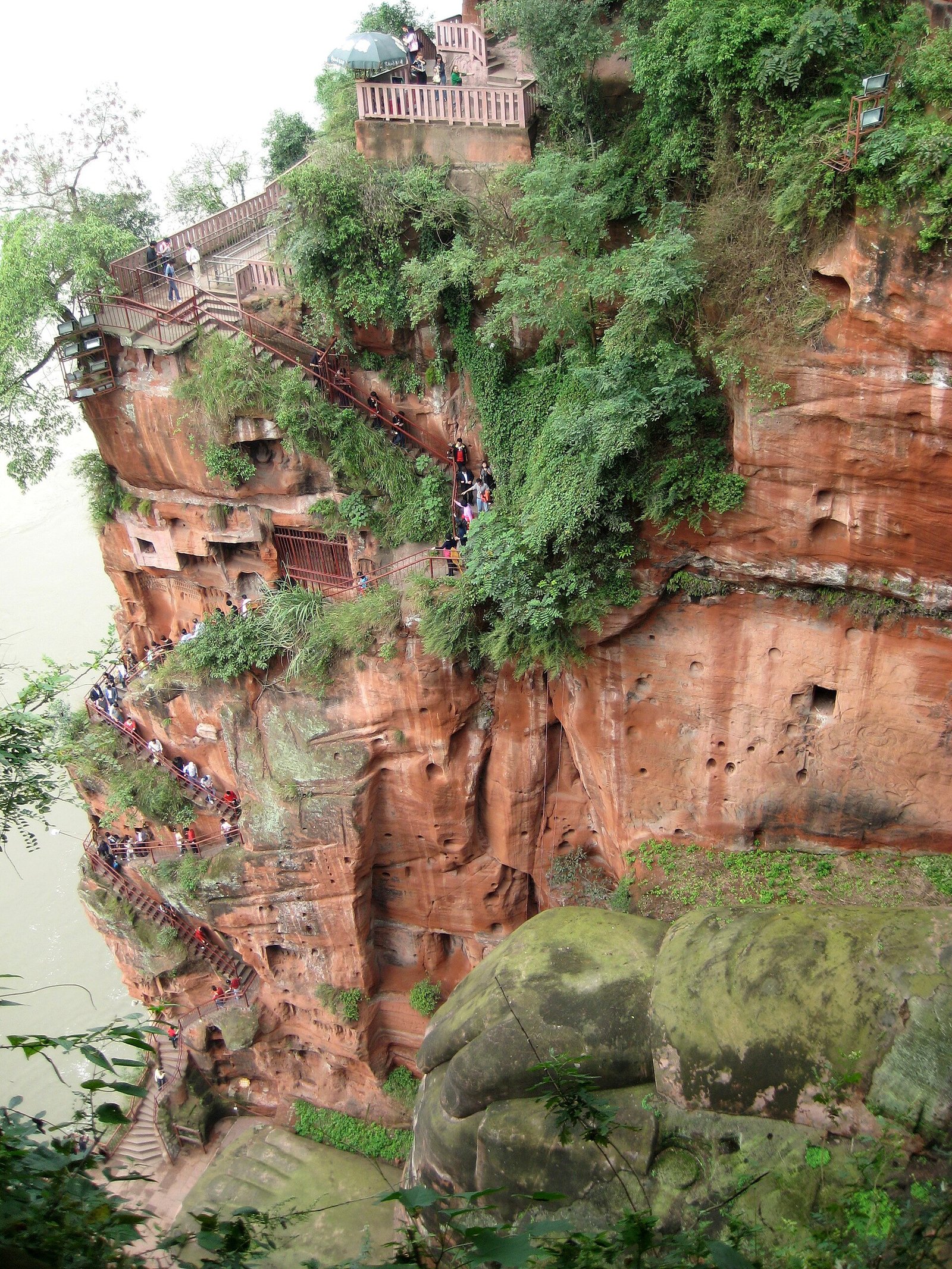
From above, the figure’s relationship to the cliff and surrounding vegetation is clear. A lower viewpoint emphasizes the extraordinary size of the carved body. A boat can show the setting from the water if services and conditions permit, but it is a different experience from the land route. Check current operations, queues, and walking restrictions before committing to a particular combination.
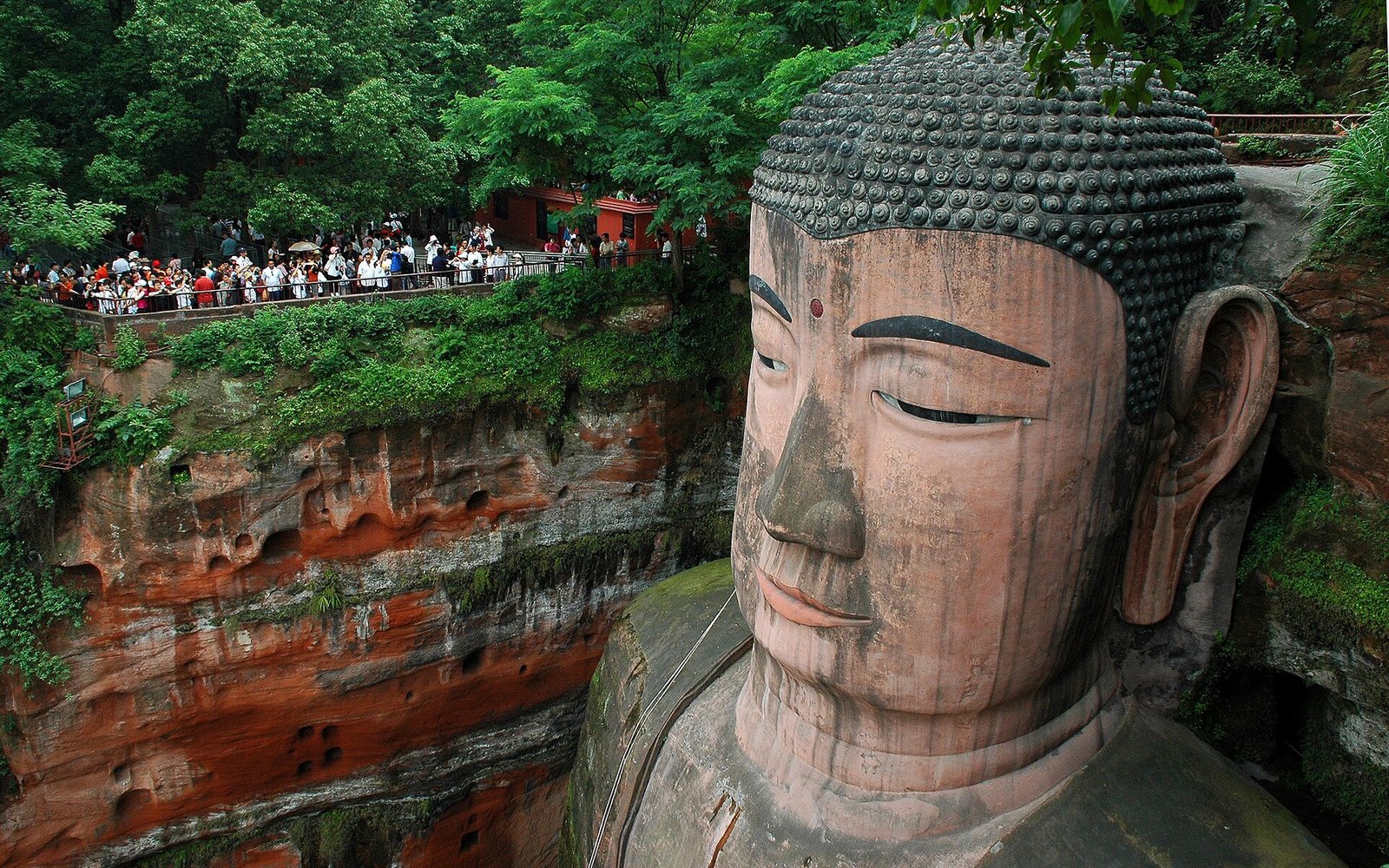
From Chengdu, allow a full day including the train or road journey and onward local transport. Narrow paths and queues may slow a land visit; river conditions can affect boat operations. Choose an approach that suits your mobility and interests. Do not assume you can thoroughly visit both Leshan and Mount Emei in one easy day.
The figure faces the meeting of the Min, Dadu, and Qingyi rivers. That setting helps explain why water belongs to the monument’s story. Look at the cliff as a material that had to be carved and maintained, rather than treating it as a neutral stand for a large statue.
The Buddha, the rock, and the water
A land visit brings the cliff, temples, and the figure’s scale into view from nearby. A river excursion can give a more complete frontal perspective, but it is a different experience with separate operating conditions. Details of drainage and the relationship between stone carving and terrain show the engineering behind the monument.
Water, rock, and weather are central to the monument’s survival. Site interpretation can explain drainage and conservation alongside religious history. The rivers’ meeting point matters to the story rather than being a convenient scenic background. Look for how the sculpture belongs to the cliff, and avoid treating the visit as only a competition to capture the most complete portrait.