Stories · Wordplay & good wishes
Why Is That Fu Character Upside Down?
That upside-down character on the door is usually deliberate. Discover the wordplay behind it—and why another family may prefer it upright.
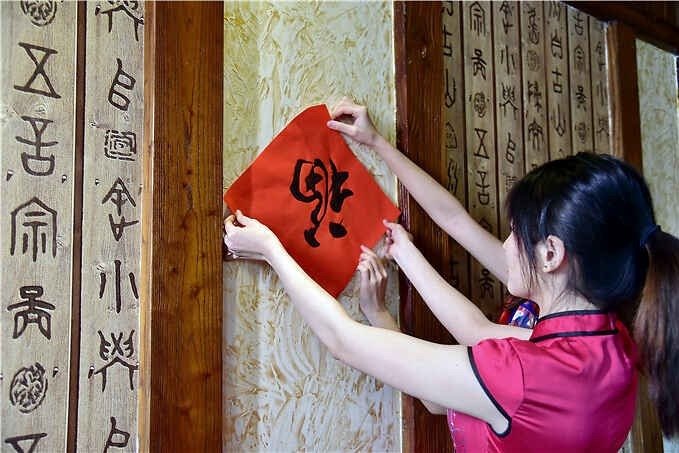
You notice a red square bearing the character fu, meaning good fortune or blessing. Some examples are upside down. The placement can make use of a spoken pun: the word for upside down and the word for arrival share the pronunciation dao.
Upside down can sound like arrived
Read that way, fu is upside down becomes a wish that good fortune has arrived. The effect depends on the connection between written arrangement and spoken language. It is an example of how decoration can do more than illustrate a symbol: it can perform a little sentence.
An upright fu can still express the same good wish without making the spoken joke. That is why orientation should be read together with position and local practice. Understanding the pun is rewarding; correcting a household’s decoration because it does not match your first example is not.
The pun is useful; the placement rule is not universal
Not every fu character should be inverted. Placement practices differ, and some households prefer an upright character on a main entrance or use inversion only in selected places. A visitor who learns the pun has understood one practice, not discovered a universal installation rule.
Stories explaining the origin of the custom often feature historical rulers, mistakes, and quick thinking. These accounts are best treated as popular legends unless supported by evidence for the specific claim. Their role is to make the custom memorable, not necessarily to document its first occurrence.
Look for other wordplay in festive objects and food names, but ask about local meanings before making a confident interpretation. The small surprise is that a decoration can be read with your ears as well as your eyes. Its orientation becomes part of the message.