Destinations · Xi'an
Terracotta Warriors
Thousands of clay soldiers reveal the ambition, craft, and military imagination of China's first emperor.

The excavated army lies in Lintong District, east of central Xi’an, in Shaanxi. The museum is part of the wider First Qin Emperor mausoleum landscape, not a downtown attraction.
Qin Shi Huang unified the Chinese states in 221 BCE. His enormous burial project included an underground army intended for the afterlife. Farmers’ discoveries in 1974 brought the warriors to modern attention. Archaeology continues, and the army pits should not be confused with the still-unexcavated central burial chamber.
Start with the pits, then look at what excavation reveals
The long rows in Pit 1 supply the most familiar view, but other displays help explain differences in formation, equipment, conservation, and excavation. Look at the relationship between surviving fragments and restored figures. An intact-looking soldier may represent careful reconstruction from broken material rather than an object uncovered in that condition. The central imperial tomb and the warrior pits are different parts of the burial complex; seeing the warriors is not entering the emperor’s burial chamber.
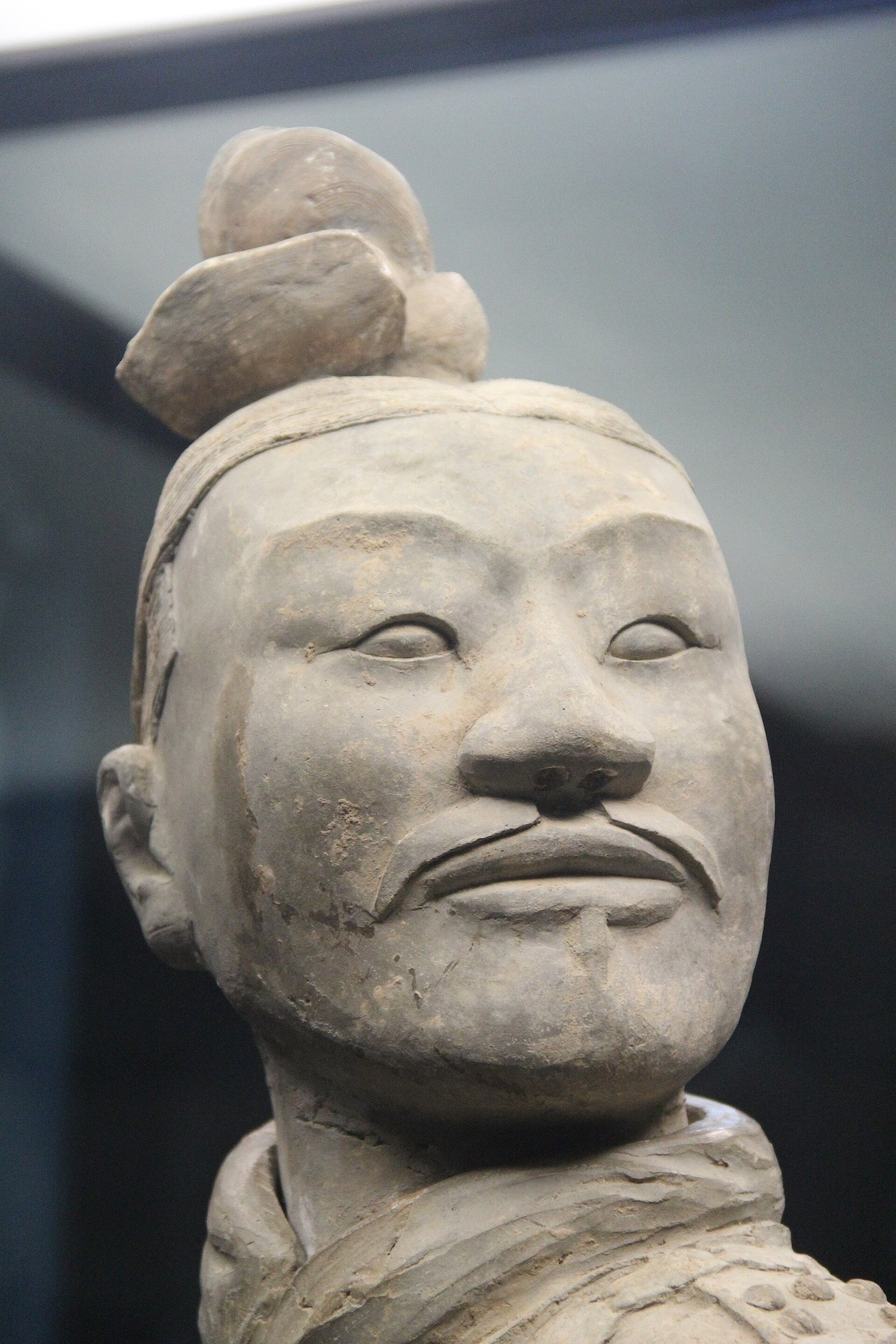
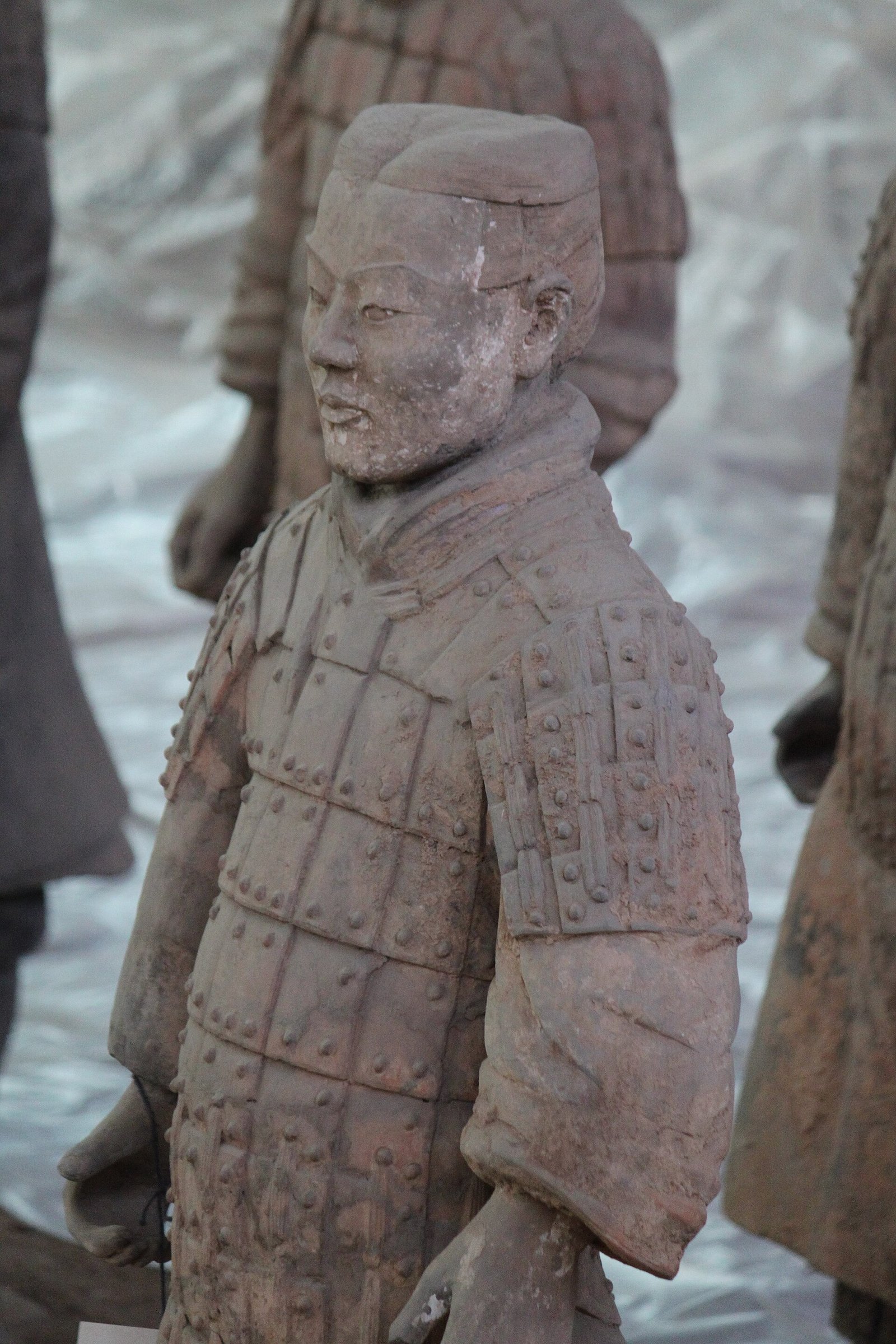
Pit 1 makes the scale immediately visible. Other displays help explain command structures, horses, weapons, manufacturing, and restoration. Notice differences in faces, hairstyles, armor, and stance; individuality exists within a system of coordinated production. Originally painted surfaces remind visitors that today’s earth-colored figures are not their complete ancient appearance.
The rows represent a military formation intended for an imperial burial setting, not statues commissioned as independent artworks for public display. Ask how figures, weapons, vehicles, and position worked together. That turns a comparison of individual faces into a question about an organized world.
Faces, armor, and the traces a photograph misses
Compare faces, hairstyles, armor, and stance while remembering that modern viewing distance limits what you can inspect. The variety communicates an organized military world through modeled individuals. Museum interpretation can explain pigment traces and conservation problems that photographs often omit. If using a guide, choose one who distinguishes excavation evidence from a memorable but unsupported story.
Make room for the journey from Xi’an
Allow a substantial excursion from Xi’an, including the road journey and the time needed to move between exhibition areas. Read introductory panels before entering the largest hall: the view is more meaningful once you know what you are seeing. Check official ticket options and avoid assuming that every nearby “warrior” showroom is the archaeological museum.