Destinations · Lhasa
Potala Palace
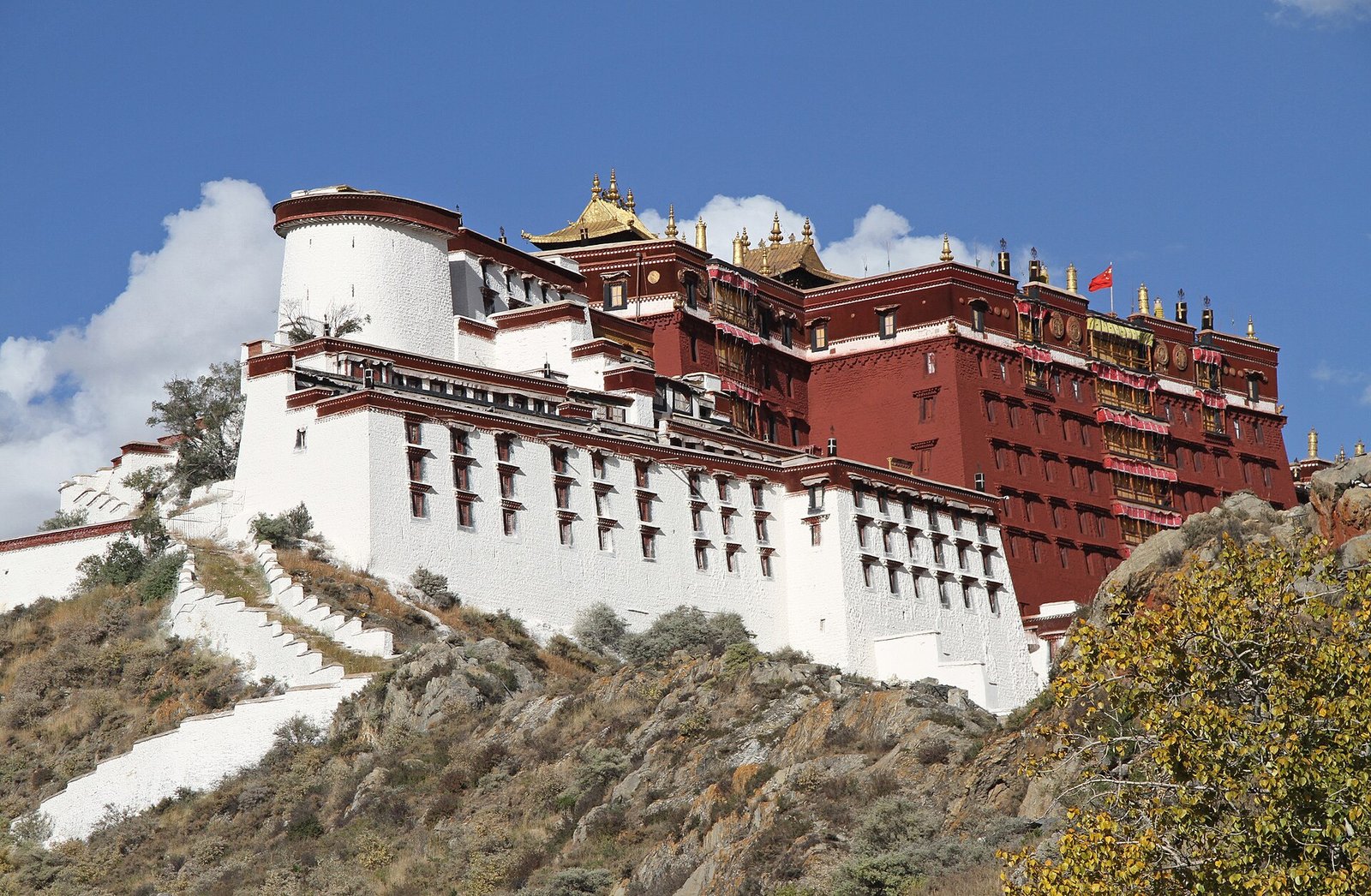
Rising above Lhasa, the Potala Palace remains one of China's most powerful architectural images.

The Potala stands on Red Hill in Lhasa, Tibet. It is a palace-monastery complex within a living city, with a different visitor experience from a mountain viewpoint or an ordinary museum.
The complex is associated with Tibetan Buddhist governance and the Dalai Lamas. Its major surviving palace construction belongs to the seventeenth century, with later additions. White Palace administrative and residential functions and Red Palace religious spaces form different parts of a connected monument.
Altitude and stairs shape the visit
Lhasa’s altitude is a major part of the visit, and the palace involves stairs. Allow a gentle arrival schedule and follow qualified medical advice appropriate to your circumstances before high-altitude travel. Confirm current access arrangements and any permit requirements applicable to your itinerary through an authorized operator. A reservation is not a substitute for those broader arrangements. The palace’s most recognizable exterior view does not communicate the effort involved in its interior route.
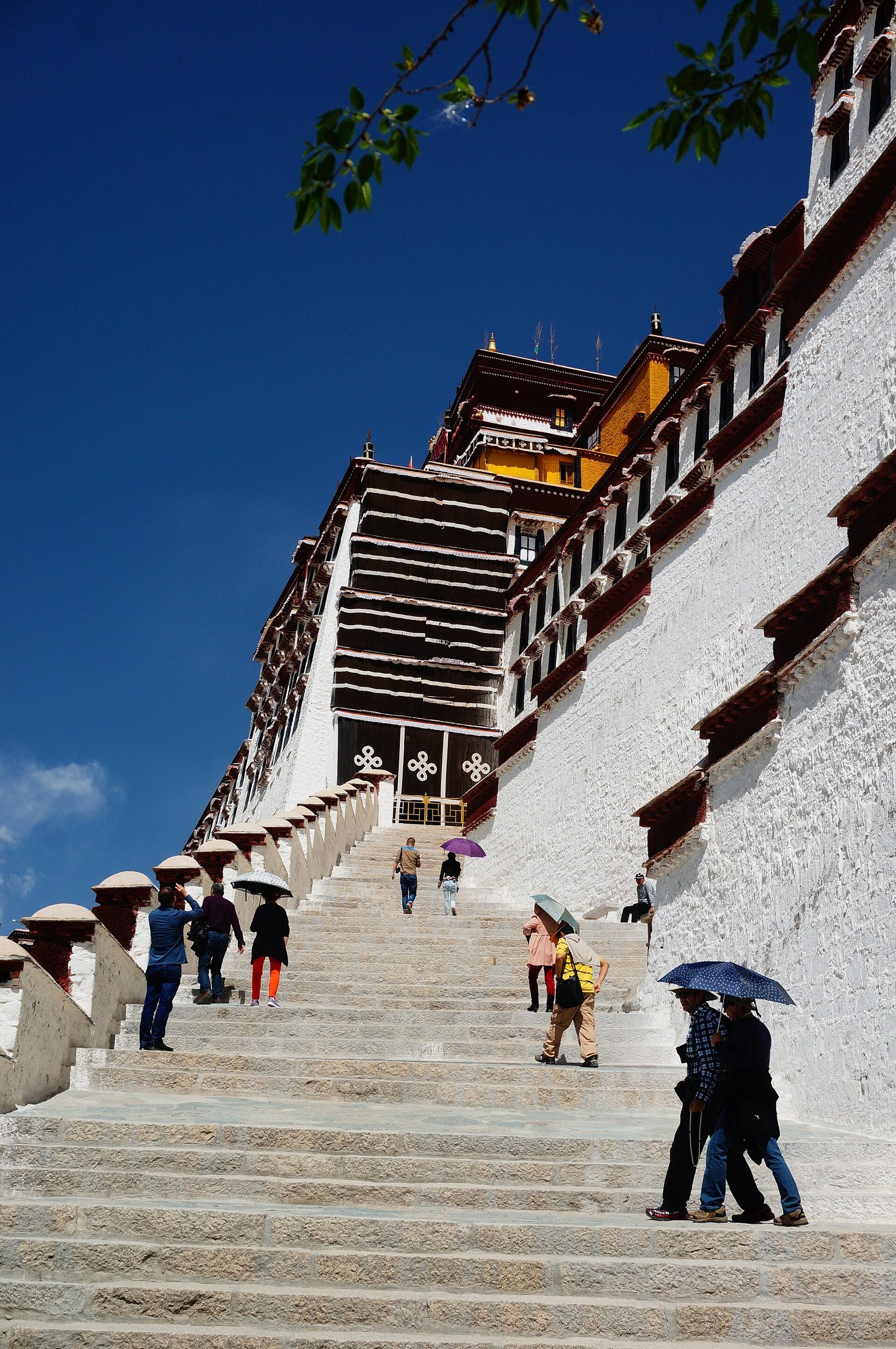
Foreign visitors should verify current Tibet travel arrangements with authorized operators and official information before booking. Do not assume a regular China visa or visa-free entry automatically provides access. Lhasa’s elevation makes a gentle arrival schedule sensible; the palace involves stairs. Confirm tickets and rules, dress respectfully, and follow restrictions on photography.
The skyline invites a long-distance view, while the interior asks for a different pace and attention. Religious objects, political associations, and later museum interpretation coexist. A guide who explains the actual room can help you avoid reducing the palace to either a spectacular building or a single simplified historical story.
Reading the White and Red Palace
The exterior layers walls, roofs, terraces, and hill into a striking silhouette. Inside, chapels and historical objects require a different kind of attention: visitors should follow the approved route and respect devotional spaces. A distant photograph explains the setting, but cannot replace the context of the interior.
The white and red portions have different historical functions, while interior spaces contain religious and political meanings that cannot be read from the skyline alone. Listen to the explanation of the room rather than assuming all richly decorated spaces served the same purpose. Respect worship, staff instructions, and restricted photography. A careful visit gives objects and living religious practice more attention than the desire to reproduce a famous image.