Culture · Folk art & celebration
Paper-Cutting
Scissors and red paper become flowers, animals, and wishes for good fortune. See festive window decorations or try a simple design in a craft workshop.
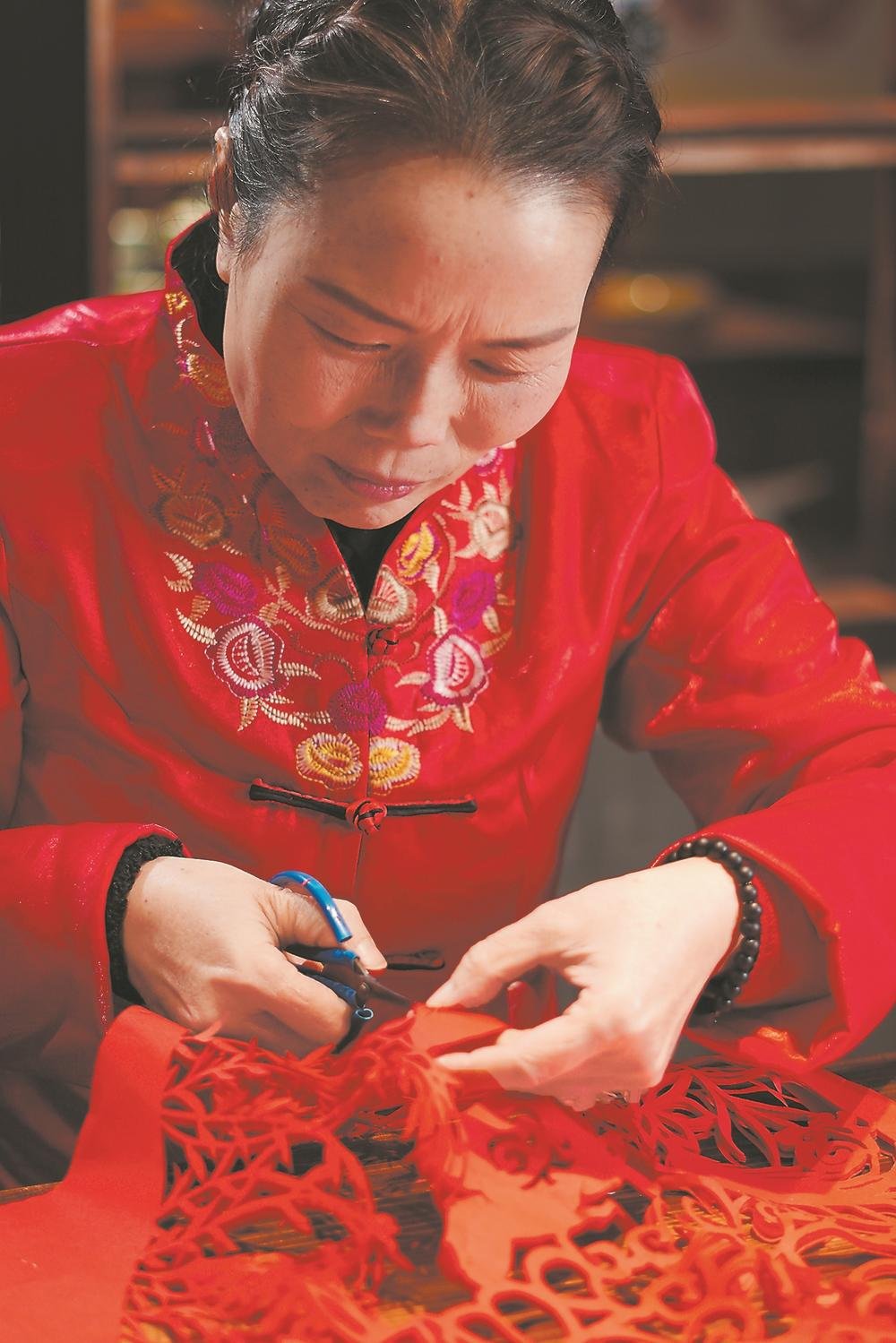
Paper-cutting asks the maker to think in connected shapes. Remove too much and a line disappears; leave the right bridge and an animal, flower, or character holds together. The finished image can look simple while its structure is carefully planned.
Empty space holds the pattern together
Look for symmetry, repeated shapes, and the way empty space forms part of the design. Motifs may carry wishes for good fortune, family happiness, or prosperity. Meanings depend on the subject and context rather than a single fixed code attached to every cut shape.
Chinese paper-cutting has diverse regional styles and uses, from window decorations to festival and ceremonial settings. Scissors and knives offer different working methods. Red paper is familiar, but color, scale, and subject vary; the tradition cannot be reduced to one New Year souvenir.
A beginner’s error often reveals the craft’s logic: an attractive line cannot remain if it has been cut free from the rest of the sheet. Ask the maker to show how small connecting areas support the whole image. The visible pattern depends on those less noticeable bridges.
In the photograph, look at the small scissors and the paper supported by the maker’s other hand. The pattern emerges through many small decisions about what to remove and what to leave connected. It is the movement of those hands, as much as the finished red silhouette, that makes a demonstration worth stopping for.
A workshop teaches you where a cut can go wrong
In a workshop, begin with a simple folded pattern and ask how the design stays connected. Handle tools according to the teacher’s instructions. When buying, compare hand-cut work with machine-cut souvenirs and ask who made the piece if the craft is important to you.
Choose the motif and pack the paper carefully
Paper is fragile and responds to moisture, so ask about flat packing and framing. A maker’s explanation of a small local motif can teach more than choosing the most elaborate design. The craft rewards looking at what is absent as carefully as what remains.