Culture · Stage art
Peking Opera
Painted faces, stylized movement, music, costume, and symbolic gestures turn historical stories into a vivid performance language.
A performer circles the stage, and a journey begins without a change of scenery. A raised whip can suggest a horse; a few deliberate steps can carry a character through a doorway. Peking Opera builds a world through movement, sound, and shared theatrical conventions rather than a realistic set.
A symbolic stage grew from regional traditions
The form developed through encounters between regional performance traditions and the capital’s theatrical world. Singing, speech, acting, and combat movement work together. Role types organize the performance, but individual characters still require interpretation: painted faces are only one part of a much larger language.
The physical language can be legible before the words are. Watch how a performer prepares a movement, holds its strongest moment, and resolves it in time with percussion. A few such observations can give a first-time viewer a way to stay engaged even when the sung language is unfamiliar.
Read the sleeve, the step, and the percussion
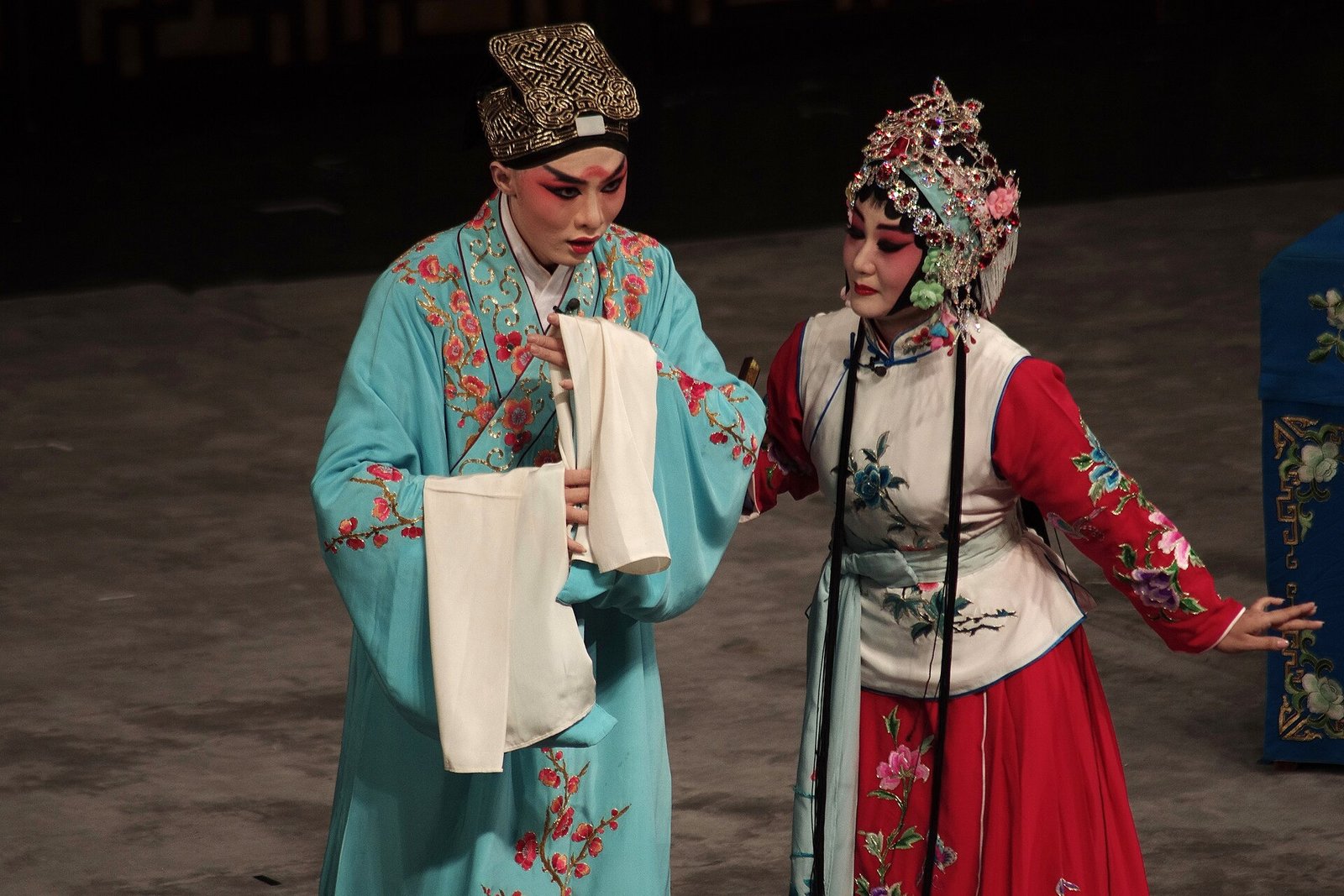
Watch how sleeves extend a gesture, how a held pose changes the rhythm, and how percussion marks an entrance or a sudden decision. A short excerpt may concentrate on a famous encounter rather than explain the entire plot. Knowing who wants what is often more useful than understanding every sung word.
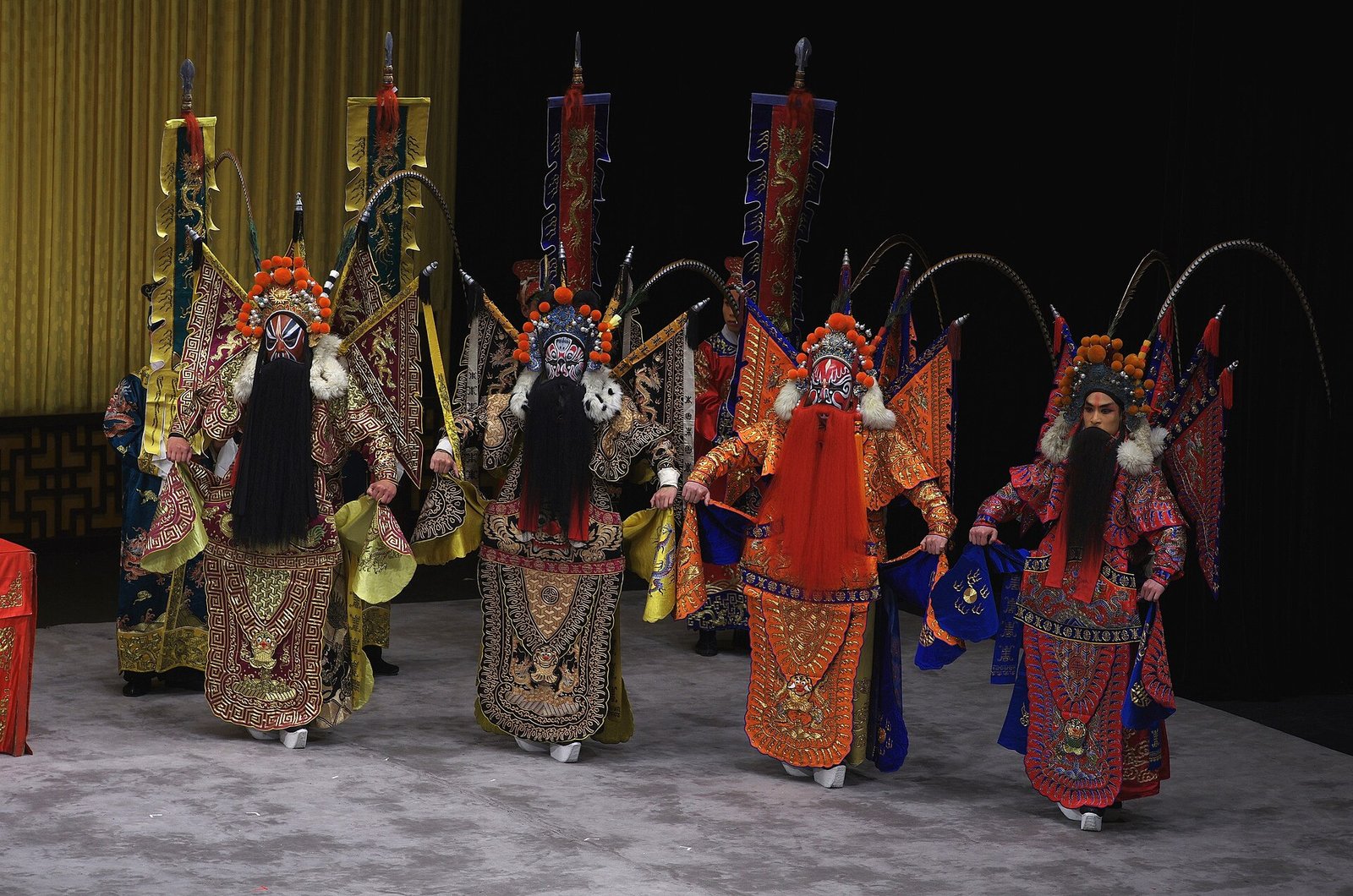
Face colors can suggest character traits within particular conventions, but they are not a universal dictionary that explains every mask. Let the action and the role guide your reading. Treat the performance as living theater: listen for the audience’s response and give the musicians the same attention as the costumes.
Choose a show you can follow
Choose a performance with a synopsis or subtitles if available. Compare a complete theatrical production with a short visitor-oriented demonstration; both can be enjoyable, but they offer different depth. Read the story beforehand and arrive early enough to settle before the first entrance.