Culture · Materials, makers & living skills
Chinese Craft Traditions: Watch, Try & Understand
Look beyond the finished souvenir: discover how clay, paper, wood, and skilled hands become objects, and how to choose a thoughtful workshop or purchase.
A painted bowl, a red window decoration, and a printed page seem to belong to different worlds. Look at how they are made and another connection appears: each depends on learned gestures, the behavior of a material, and choices that a machine-made imitation may hide. Meeting a craft through its process gives you more to remember than the name of a souvenir.
Begin with what the hands are doing
Chinese craft traditions are not one style preserved from one period. Skills moved between workshops, families, markets, temples, and courts; makers adapted them to new customers and materials. A contemporary studio can use inherited methods while producing a new design. A machine-assisted object is not automatically worthless, and a product labeled “traditional” is not automatically handmade. The useful question is which stages the maker actually carried out.
In a demonstration, follow the transformation. Is the person shaping clay, trimming a form, painting a surface, carving a block, or cutting a pattern? These are separate skills. One maker may specialize in a single stage while another completes several. Asking about the process often opens a better conversation than asking whether a piece is “real Chinese art.”
Clay carries the decisions into the kiln
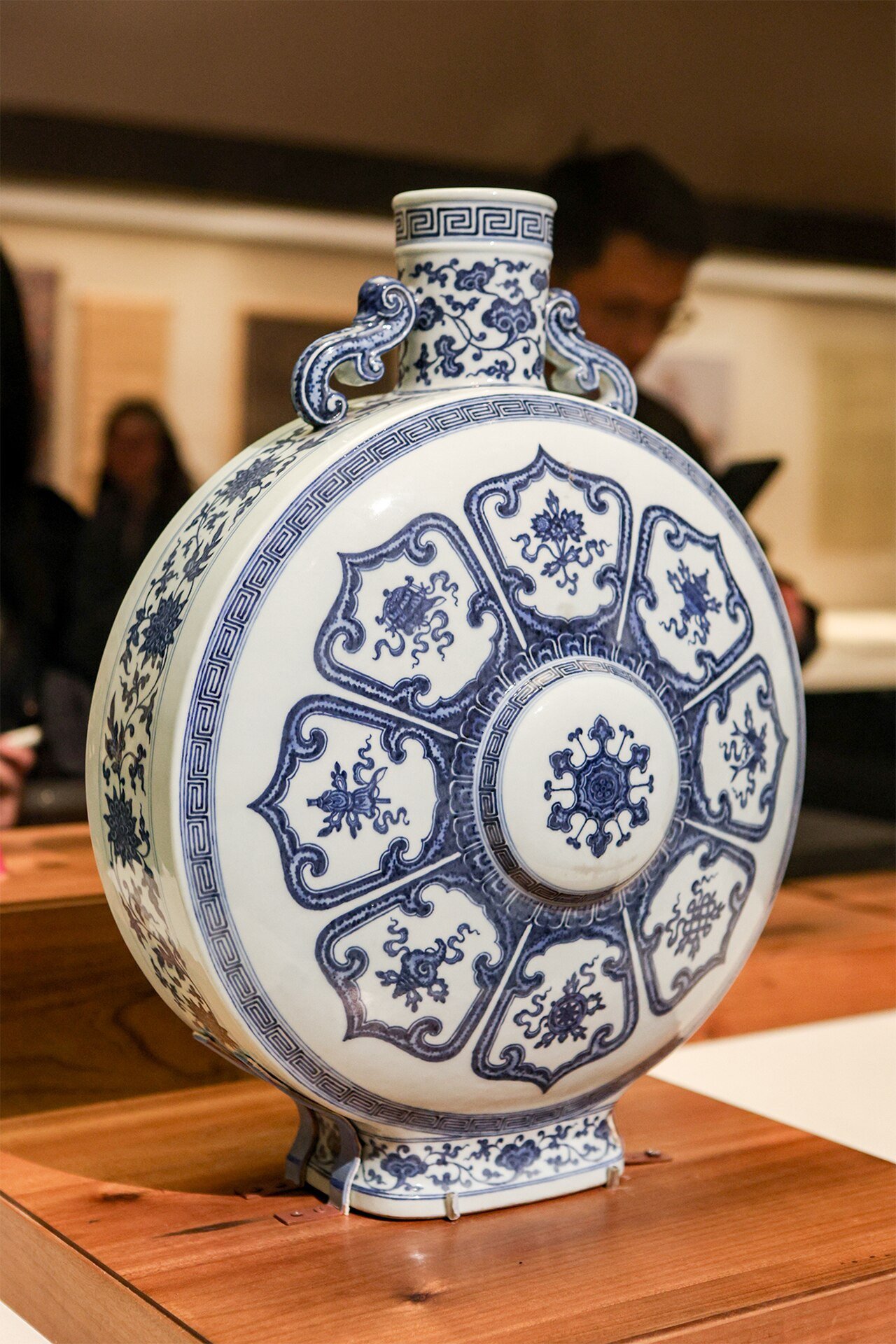
Jingdezhen in Jiangxi offers a particularly clear encounter with ceramic traditions: museums, workshops, and contemporary ceramic spaces explain how a city developed around making and trading porcelain. Other ceramic centers have their own materials and aesthetics. A blue-and-white bowl and an unglazed earthenware vessel should not be treated as the same product just because both began as clay.
A porcelain object is formed, dried, and finished through a sequence that may involve trimming, decoration, glazing, and one or more firings. The exact order depends on the technique. A painted line that looks effortless can require control of both the brush and the curved surface; kiln conditions add another set of decisions. Look at the foot, the profile, and the relation between decoration and shape rather than judging quality by how much ornament covers the bowl.
A short visitor session usually teaches only one part of this work. If you shape a pot, it may still need drying and firing after you leave. Ask whether the class uses porcelain or another clay, what finishing is included, and whether your own piece will be collected or shipped. A photograph of your wet clay is not a guarantee that a finished ceramic object will survive firing unchanged.
Cut paper creates a picture by taking material away
Paper-cutting can use scissors or a knife, with folded or unfolded paper. The finished pattern depends on what remains connected as much as on what is removed. Flowers, animals, auspicious characters, and scenes of life may decorate windows or accompany celebrations. Regional styles and the maker’s intentions matter; not every red paper image is a standardized national symbol.
In a workshop, try one simple design and pay attention to the bridges between shapes. A very fine cut that breaks the structure is less useful than a deliberate, stable line. Ask whether a display piece was cut by hand, laser-cut, or printed to resemble a cutout. These processes can produce attractive objects, but they involve different kinds of labor.
A carved block turns a page into a repeatable image
In engraved-block printing, an entire page or image is cut into a block. Its raised surface receives ink and transfers the design onto paper. Carving reverses the design so that the printed impression reads correctly; applying ink and handling the paper affect the final result. This differs from movable type, where separate characters can be rearranged.
A demonstration is most revealing when you can compare the block with its print. Notice which lines stand above the surface and how a wood grain, a cut, or the pressure of printing changes the image. A tourist workshop may provide a ready-made block for you to ink and print. That is a legitimate introduction, but it does not mean you have learned the much longer carving stage.
Make the workshop or purchase part of the encounter
Before booking, clarify the language of instruction, duration, total price, group size, tools, and what you will take home. Ask about assistance if you have limited hand mobility. Respect the maker’s workspace: obtain permission before touching work, filming a technique, or photographing an unfinished commission. You can enjoy a visit without demanding that a working studio become a performance on command.
When buying, ask where the object was made and which processes were done by hand. For ceramics intended for use, ask whether the glaze and decoration are suitable for food contact and how the piece should be cared for. Check packaging and delivery arrangements before paying. A maker’s explanation and a clear receipt are more helpful than an unsupported promise that an object is an antique.
Choose a piece because its form, process, or story matters to you. A modest paper cut from someone whose work you watched can carry more meaning than a large object bought only for its apparent age. Living craft is sustained by people making choices today; the pleasure is in recognizing those choices, not pretending that the present has disappeared.