Stories · Names & identity
Why the Family Name Comes First
Meet Wang Wei. Which word is the surname—and why does it come first? A small naming habit can change how you read an introduction.
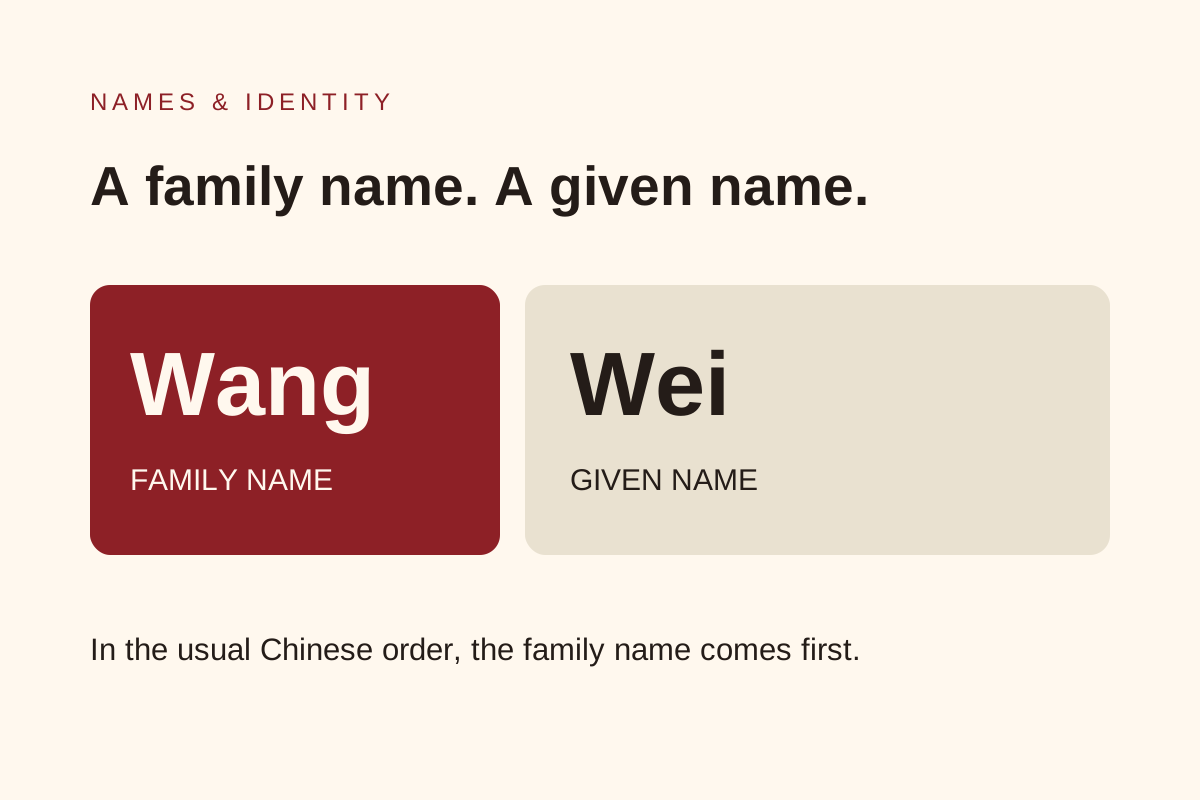
You meet someone called Wang Xiaoming. Wang is usually the family name and Xiaoming the given name. Once you recognize that order, a business card, a museum label, or a conversation becomes easier to follow. The first word is not necessarily the personal name you should casually use.
Wang Xiaoming is not usually Xiaoming Wang
Family names commonly consist of one character, but compound surnames such as Ouyang show why counting words is not a reliable rule. Given names can have one or more characters, and romanization can make their boundaries less obvious. The same English spelling may also represent different Chinese characters and meanings.
Name order connects the person with a family identity before distinguishing the individual. That is a useful cultural observation, not a complete explanation of how someone thinks about family. People have different preferences, and Chinese names used abroad may be rearranged, joined differently, or accompanied by an English name.
A name introduces a useful travel habit: ask which part the person prefers you to use. An English name on a badge, a Chinese full name on a ticket, and a form with separate surname fields can all belong to the same individual without contradicting one another.
The characters—and the person—tell you more
In conversation, ask how a person would like to be addressed. A surname with an appropriate title can be more comfortable than an unfamiliar person’s full given name, but context matters. For a ticket or hotel booking, follow the document’s surname and given-name fields exactly instead of guessing from a spoken introduction.
A name’s written characters can reveal something that sound alone cannot. If the conversation allows it, asking which character is used opens a more interesting exchange than assuming two people with the same romanized name must share its meaning. The practical discovery is small: learn the order, then leave room for the individual.