Culture · Portable art · Bamboo, ink & sandalwood
Chinese Folding Fans
A breeze, a painting, a trace of sandalwood: discover how Chinese folding fans bring engineering, personal taste, and miniature works of art into the palm of a hand.
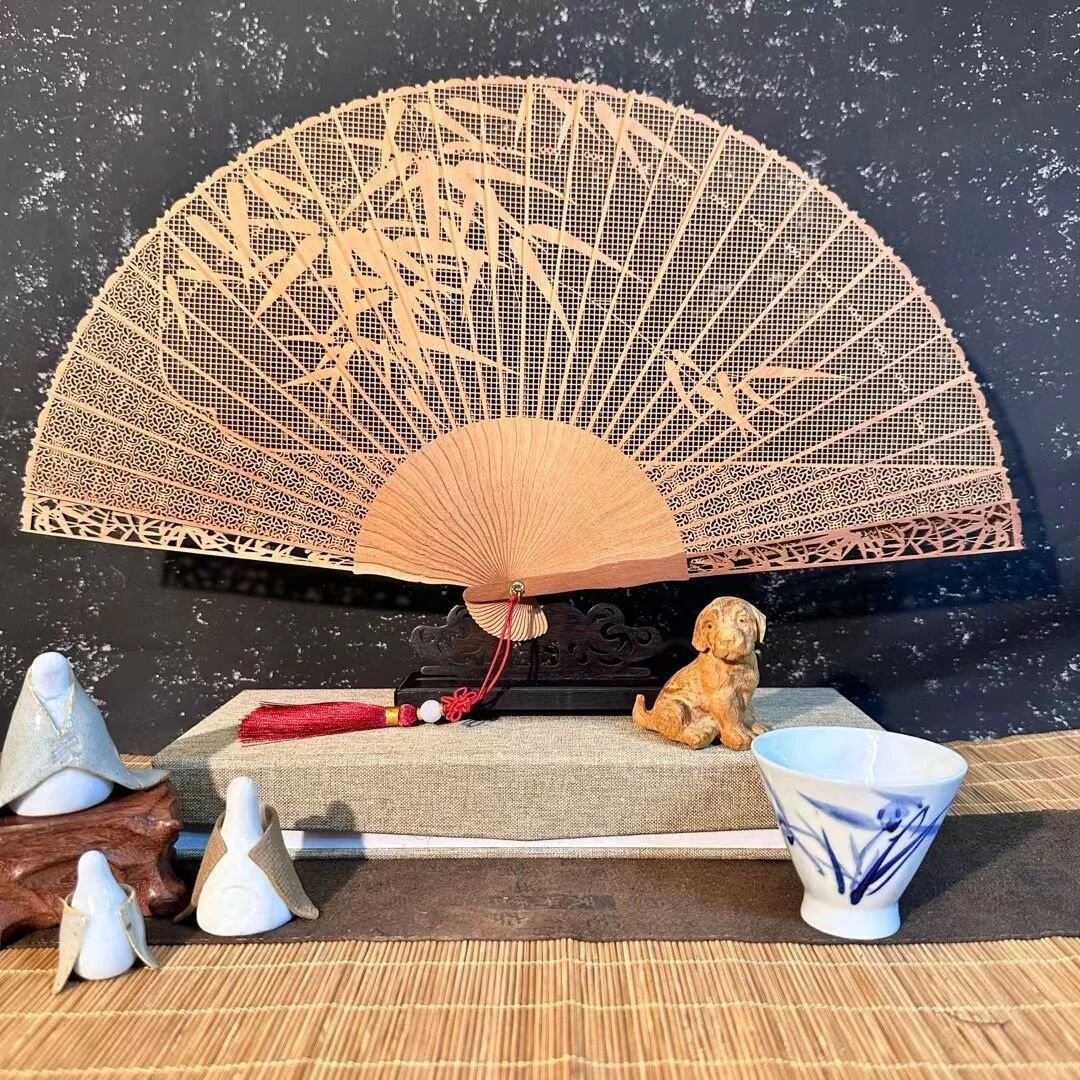
Closed, a folding fan can look almost impossibly slight: a narrow bundle of ribs that fits into one hand. Open it, and a landscape appears. Mountains stretch across a curved horizon; a few lines of calligraphy occupy the space beside them. Close it again, and the picture disappears into its own folds. The pleasure lies partly in that transformation.
In China, the folding fan—zheshan—is both a practical way to move air and an object through which makers, painters, and owners express their taste. You can appreciate one without reading a single character. Start with the movement of the ribs, the texture of the leaf, and the way an artist has made an awkwardly shaped surface feel effortless.
An imported idea, a distinctive Chinese life
Fans have a long history in China, but a history of fans is not automatically a history of folding fans. Fixed fans, including the round silk tuanshan, belong to an earlier tradition. The familiar collapsible form developed in Japan and reached China through cultural exchange. Chinese production is documented in the Song period; by the Ming and Qing dynasties, Chinese workshops and artists had transformed it into a highly developed local art.
Suzhou became an important center. The city’s fan-making heritage records describe local folding-fan production in the Southern Song, followed by workshops and celebrated products in the Ming. This was a setting where skilled bamboo work, fine paper, and a strong painting culture could meet in a single useful object.
At the Ming court, a fan might bring together writing and painting on opposite faces. Under the Qing, materials, carving, and decoration became more varied. Surviving fans show that usefulness did not prevent sophistication: an object carried for a summer breeze could also carry a poem, a painter’s brushwork, or the memory of a gift. That combination helps explain why a modest hand-held object has earned so much attention.
Read the structure before the picture
Hold a fan by its lower ribs and look toward the pivot. The narrow inner ribs spread from that shared point, while two stronger outer guards protect the bundle when it closes. The pleated surface is called the leaf. Paper or silk bridges the ribs, opening into a broad arc above a much narrower base. The shape is simple to recognize and surprisingly demanding to make well.
The ribs must sit together neatly enough for the fan to close, yet move freely enough to open without a struggle. A maker has to balance strength with lightness; a bulky frame can spoil the pleasure of an otherwise beautiful leaf. Smooth edges and careful finishing matter because this is something intended to be held, not only looked at.
Suzhou’s bamboo ribs are admired for their shaping and polishing. A plain-looking fan can therefore contain considerable work. Look along the guards and toward the pivot: the precision of a curve or the even spacing of the ribs can be as revealing as an elaborate painted surface.
Paper-leaf folding fans
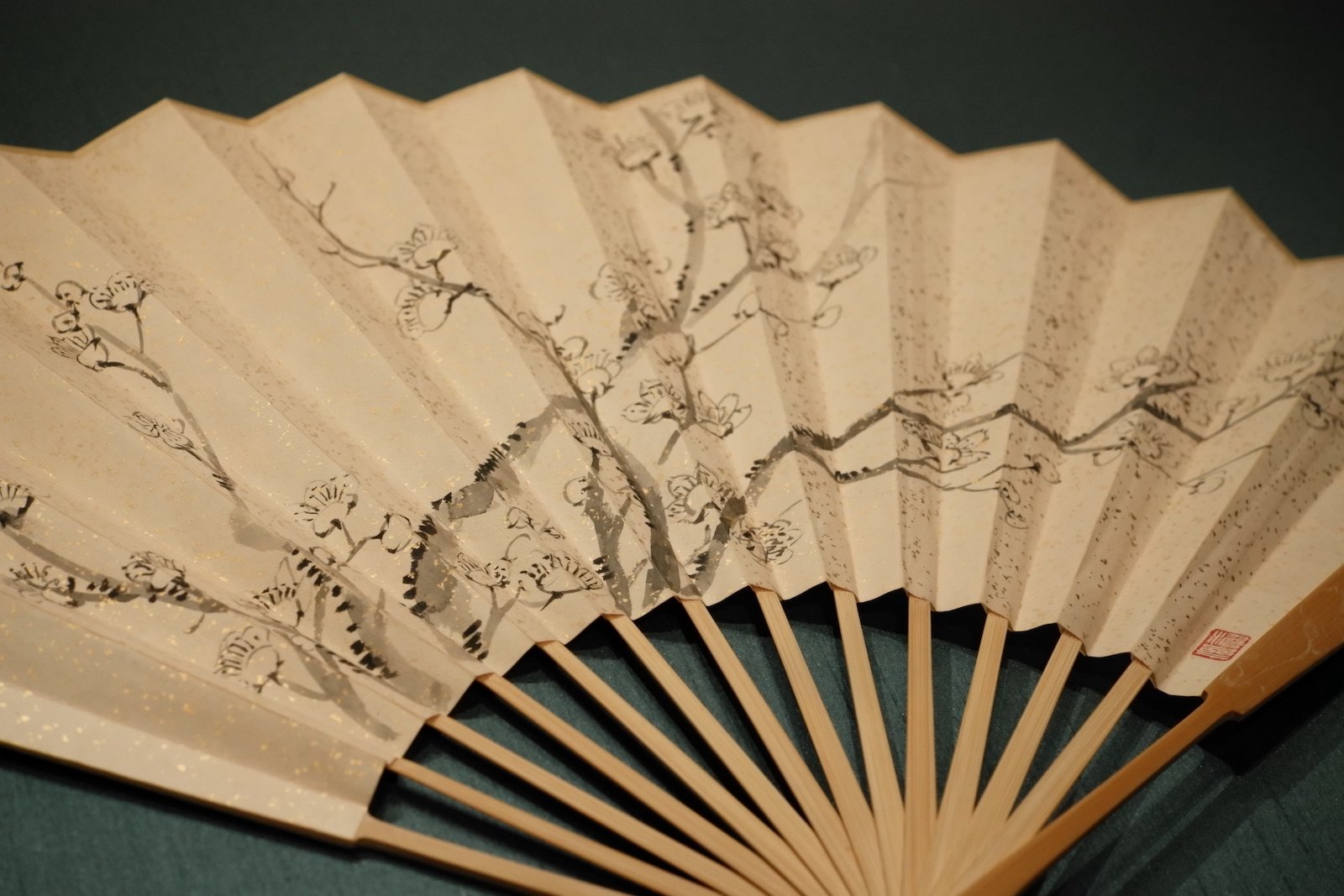
A pleated paper leaf over bamboo or wooden ribs is a familiar setting for ink painting and calligraphy. Leaves may be plain, tinted, or decorated with gold. Paper treatment changes how the brush behaves; a surface chosen for painting is more than a blank sheet glued to a frame.
Silk-leaf folding fans
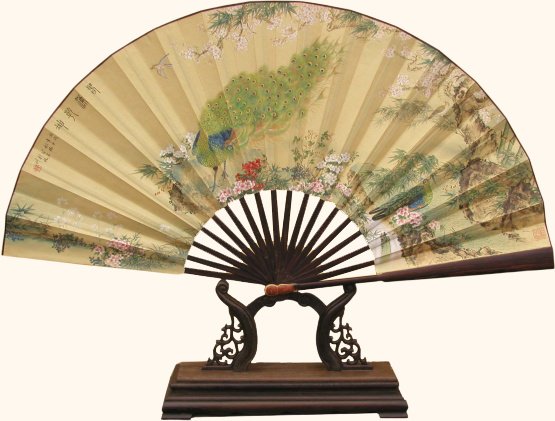
Silk can also form the pleated leaf of a folding fan. Its fine texture offers a different surface for color and line. The material alone does not determine the shape: a silk fan may instead be a fixed palace fan, so check whether it actually folds.
Sandalwood fans
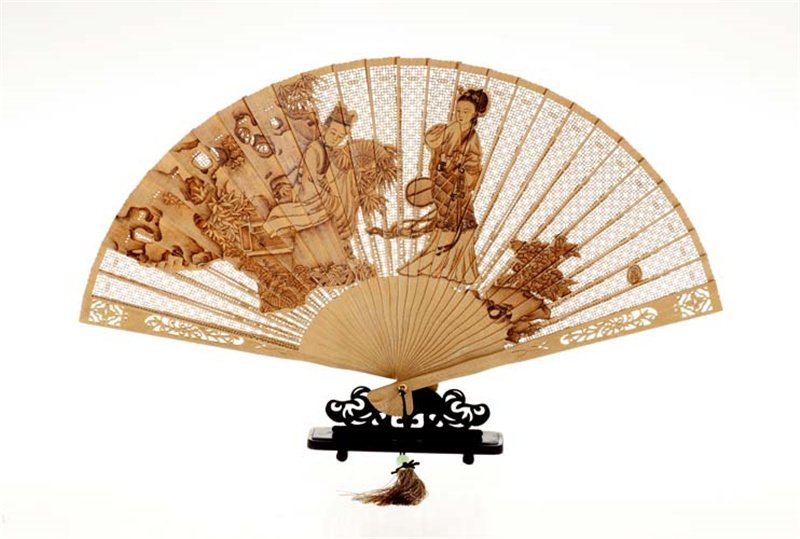
In the Suzhou tradition, a sandalwood fan is a related but distinct form developed from the folding fan. Thin wooden slats can create the visible surface themselves, often with intricate openwork, instead of carrying a continuous paper leaf.
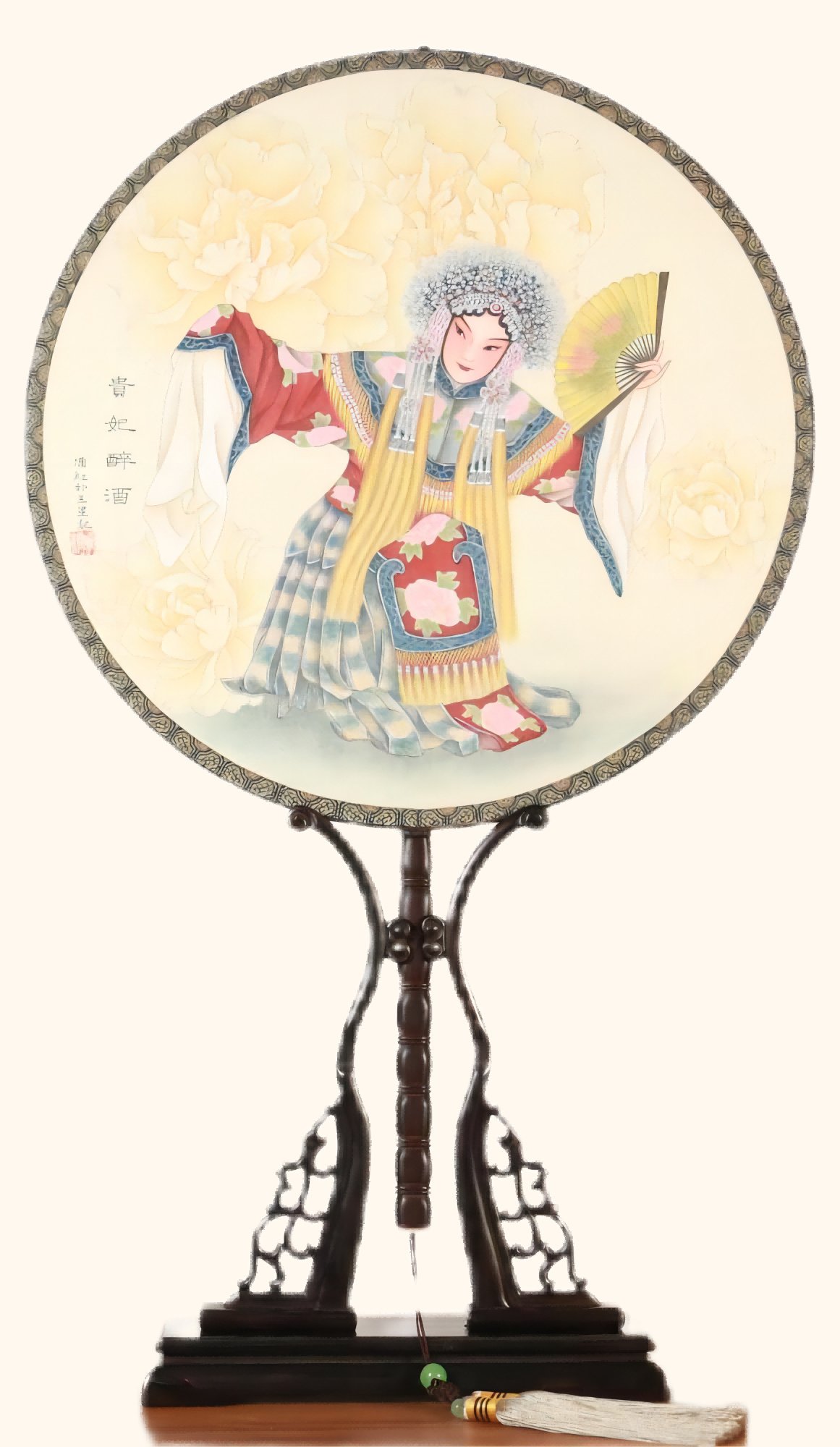
The fixed palace fan: a useful comparison
A round, oval, or other shaped silk fan on a handle belongs to a neighboring tradition. It does not collapse around a pivot. Seeing one beside a folding fan is a useful way to recognize how different construction creates a different silhouette.
A painting that has to negotiate every fold
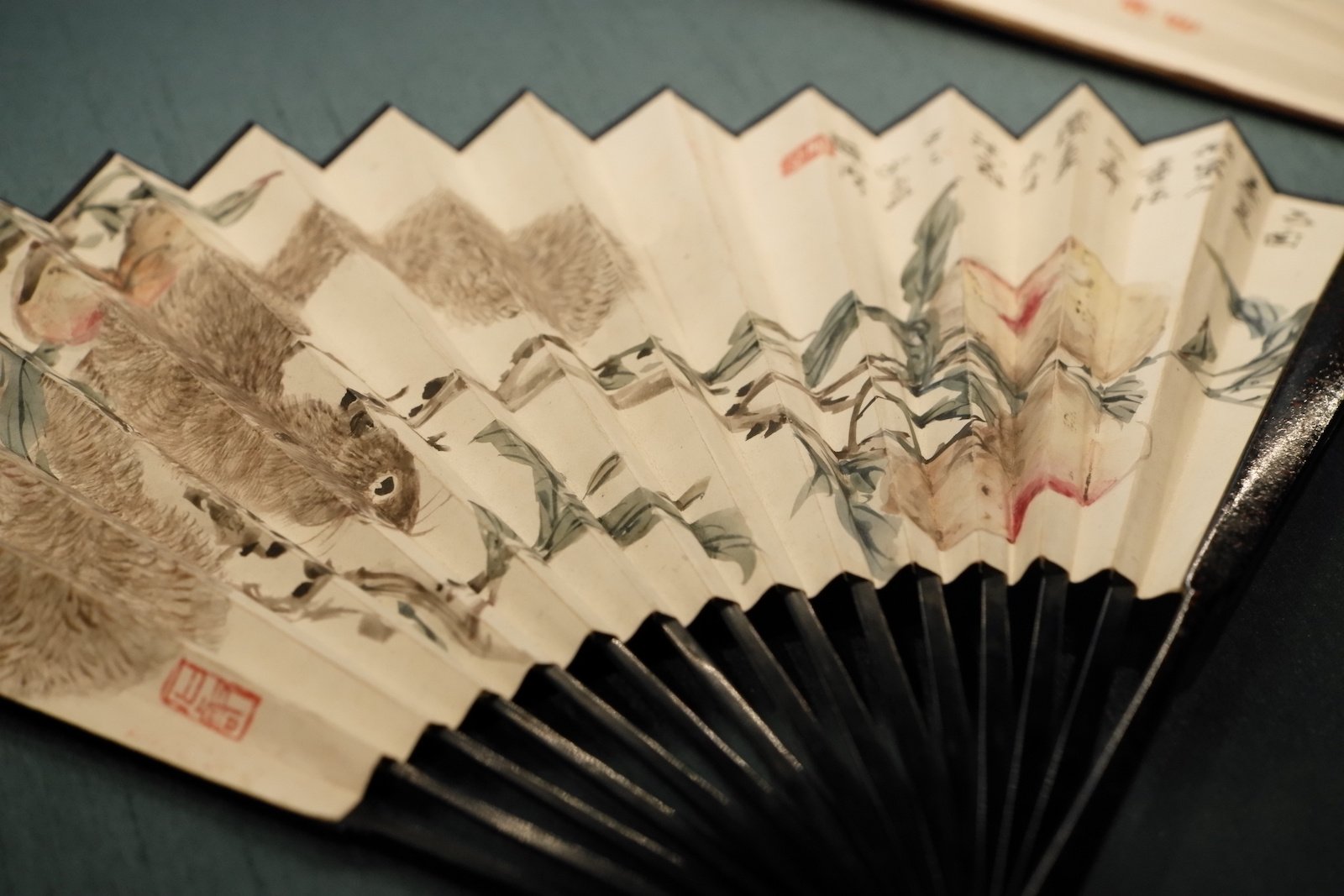
A folding-fan leaf is not a rectangular picture trimmed into a semicircle. Its lower edge curves upward, its top is wider than its base, and creases interrupt the surface. An artist must make the subject work across that changing space. A branch can follow the arc; mountains can rise and recede along it; open areas can keep a small scene from becoming crowded.
Flowers and birds, bamboo, figures, and landscapes all appear in the tradition. Calligraphy introduces another rhythm. Columns of characters must occupy the spreading surface convincingly, while an inscription and a red seal can balance the painted forms. Rather than treating writing as an unexplained decoration, ask what it says: it may be a poem, a dedication, or a record of the circumstances in which the work was made.
Shanghai Museum’s collection makes the distinction particularly clear. Its fan holdings include early fixed-fan paintings as well as Ming folding-fan leaves, such as Xie Jin’s scene of trees and a fishing boat, and complete fans combining landscape and calligraphy. A fan-shaped work mounted flat in an album may therefore be a preserved leaf, rather than an object still intended to open and close.
There is also an intimate social dimension. A dedication can make the fan a gift to a particular person. Painting, handwriting, and the object’s movement then belong to the same encounter: art that was meant to pass between hands, rather than remain permanently on a wall.
The fragrant fan: a smaller world of wood and light
The scented fan many visitors associate with a woman’s summer accessories is often a tanxiang shan, or sandalwood fan. Its characteristic fragrance comes from the aromatic wood itself. That is different from spraying perfume onto an ordinary paper fan; not every scented souvenir is made from sandalwood, and a strong smell by itself does not establish the material.
Although sandalwood had been used for fan ribs earlier, the finely pierced Suzhou sandalwood fan familiar today developed in the early twentieth century. This particular style is a relatively modern chapter in a much longer fan-making history. Its appeal includes scent, but also the extraordinary amount of visible detail that can be fitted into thin wooden slats.
In lahua openwork, a fine saw creates tiny pierced patterns. Tanghua uses a heated tool to make darker marks, producing images through controlled scorching rather than brush-applied ink. Carving and painted decoration can add further layers. The spaces are part of the design: hold the fan against a light background and the pattern becomes as legible through its openings as through the wood.
Compact, delicately decorated examples can make elegant accessories, including for women, but their artistry is not reserved for one gender. Large display fans and elaborate narrative scenes belong to the same wider craft. The important questions are what the fan is made from, how the decoration was achieved, and whether it was designed for use or display.
What to notice in a workshop or shop
Ask to see the fan closed as well as open. A finished picture can distract from a poorly fitted structure. With permission, open it slowly from the guards; feel whether the movement is even and check that the leaf returns neatly into its folds. Avoid copying the dramatic snapping motions of a stage performer with an unfamiliar, delicate fan.
If the seller describes the decoration as hand-painted, ask about the painter and the process. Printed fans can be attractive everyday purchases, but printing, original brushwork, and a reproduction of an older painting are different things. A signature or red seal alone does not explain which you are looking at. For a custom inscription, agree on the wording and its meaning before the brush touches the leaf.
For a fragrant wooden fan, ask for the stated wood rather than accepting “fragrant wood” as a precise material description. Ask also whether it has added scent and whether the object is intended for regular fanning. Choose something you enjoy using or looking at; neither elaborate carving nor an impressive price automatically makes a better companion for a summer journey.
Let it remain an object you can enjoy
A paper fan rewards gentle handling. Keep it dry, avoid crushing it at the bottom of a bag, and let it close along its existing pleats rather than forcing new ones. Store a delicate fan in a sleeve or box. For scented or decorated wood, avoid adding perfume, oil, or cleaning products without guidance from the maker.
The next time you see a fan in a garden, on a stage, or in a craft workshop, look beyond the outline. Follow the path from the pivot to the ribs, from the ribs to the leaf, and from the leaf to the painter’s last stroke. What fits into a hand can contain an entire way of thinking about materials, movement, and beauty.