Travel Tips · Public holidays & festival travel
China’s Holidays: Dates, Traditions & Travel
Understand the seven national public holidays, their origins and festival foods, the official 2026 breaks, and what busy dates mean for trains, roads, and sightseeing.
China’s holidays are both cultural occasions and practical turning points for a trip. Some bring families home, some send them sightseeing, and some transform just one riverside or neighborhood for an evening. Knowing what people are celebrating helps you understand what you see; knowing the actual days off helps you get there.
First, read the holiday calendar correctly
A festival date and a holiday break are different things. Mainland China has seven nationwide public holidays. Their statutory days total thirteen under the rules effective from 2025, but weekends and adjusted working days can create longer breaks. A Saturday or Sunday may become an official working day to compensate for time off elsewhere. This is called tiaoxiu (调休). A foreign calendar marking only the festival itself can miss most of the travel rush.
New Year’s Day, Labor Day, and National Day have fixed Gregorian dates. Spring Festival, Dragon Boat Festival, and Mid-Autumn Festival follow the Chinese lunisolar calendar, so their Gregorian dates move. Qingming follows a solar term and usually falls on April 4 or 5, rather than having a fixed lunar date. School holidays and annual leave add another layer: a working day on the official calendar does not guarantee a quiet attraction.
The official 2026 breaks at a glance
| Holiday | 2026 break, inclusive | Days off | Adjusted working days |
|---|---|---|---|
| New Year’s Day | Jan 1–3 | 3 | Jan 4 |
| Spring Festival | Feb 15–23 | 9 | Feb 14 and Feb 28 |
| Qingming | Apr 4–6 | 3 | None |
| Labor Day | May 1–5 | 5 | May 9 |
| Dragon Boat Festival | Jun 19–21 | 3 | None |
| Mid-Autumn Festival | Sep 25–27 | 3 | None |
| National Day | Oct 1–7 | 7 | Sep 20 and Oct 10 |
These are holiday blocks, not a promise that every shop, museum, or restaurant closes for the entire period. Tourist businesses may remain open while some family-run restaurants close. Booking windows, special opening hours, traffic controls, and event dates still need checking separately.
New Year’s Day: a modern calendar reset — 元旦
January 1 begins the Gregorian year. In modern China it sits alongside, rather than replaces, the traditional new year celebrated at Spring Festival. The statutory holiday is one day; the actual break depends on the annual arrangement shown above. It is a modern civic holiday, so it does not carry one shared ancient reunion ritual.
People may meet friends, go shopping, take a short trip, attend a concert, or watch a locally organized countdown. There is no single food that everyone is expected to eat on January 1. A celebratory restaurant meal is more representative than claiming that dumplings are compulsory nationwide. Fireworks and outdoor celebrations depend on local permission and the event organizer.
Spring Festival: returning home to cross into a new year — 春节
Spring Festival starts on the first day of the first lunar month, but preparations and family reunions begin earlier. Its roots lie in long-standing seasonal renewal, honoring ancestors, and wishes for household well-being; it is not explained by a single legend or one founding year. The familiar story of the monster Nian is a folk narrative, not a documented account of how every custom began. The statutory days are Lunar New Year’s Eve and the first three days of the new year.
Families clean and decorate their homes, put up red couplets, prepare a reunion dinner, exchange greetings, visit relatives, and give children red envelopes. Temple fairs and lion or dragon performances may be part of local festivities. Practices differ between families and regions, and fireworks are restricted in many cities. A visitor can enjoy a public celebration without assuming every household follows the same script.
Northern families often make jiaozi dumplings; other households serve rice cakes, tangyuan, fish, or distinctive local dishes. Names and shapes carry wishes: fish is linked through wordplay to abundance, while niangao rice cake suggests rising year after year. These are examples, not a menu all of China shares. If you want a reunion-style restaurant dinner, ask about advance reservations, set menus, and how many people the dishes serve.
Qingming: remembering family, then stepping into spring — 清明节
Qingming, often called Tomb-Sweeping Day, brings together the Clear and Bright solar term, ancestor remembrance, and customs historically associated with the Cold Food Festival. The modern observance grew from overlapping traditions rather than a single origin story. Its statutory holiday is one day on Qingming itself.
Many families visit ancestral graves, clear weeds, place flowers or offerings, and remember relatives who have died. The same season also invites spring walks, kite flying, and outings among blossoms. Remembrance is personal: do not photograph a family’s grave-side ceremony without permission or treat a cemetery visit as a staged cultural performance.
In Jiangnan, qingtuan are a recognizable seasonal treat: chewy green rice cakes colored with plant juices, often filled with red bean paste. Savory fillings, including salted egg yolk and pork floss, are also sold. Qingtuan are especially associated with Jiangnan; other regions and families have different seasonal foods and customs.
Labor Day: workers’ history, today’s spring getaways — 劳动节
May 1 is International Workers’ Day. Its history belongs to the international labor movement, including the late nineteenth-century struggle for an eight-hour working day associated with Chicago. In China it is a civic holiday honoring labor, not an ancient seasonal festival. The statutory days are May 1 and 2.
Many people use the break for sightseeing, visiting relatives, concerts, shopping, or a nearby countryside stay. There is no nationally prescribed Labor Day dish. Travelers can explore the food of their destination without expecting a special holiday menu. The length of the break, pleasant spring conditions in many regions, and the chance to leave home make it an important domestic travel period.
Dragon Boat Festival: racing, remembrance, and leaf-wrapped rice — 端午节
Dragon Boat Festival falls on the fifth day of the fifth lunar month and has one statutory day off. Its traditions combine remembrance, communal racing, and older practices intended to protect households as summer approaches. The poet Qu Yuan is the best-known commemorated figure, but regional traditions also remember other people. Saying that every custom began solely with his death oversimplifies a much broader festival.
Where events are held, teams paddle long boats to the rhythm of a drum while spectators line the banks. Families may hang mugwort and calamus, make fragrant sachets, or give children colored thread bracelets. These customs vary by place; a dragon boat race is an organized event with its own date and viewing arrangements, not something guaranteed on every river.
Zongzi are the characteristic food: sticky rice wrapped in leaves and steamed or boiled. Northern versions are often sweet, with dates or bean paste, while many southern versions contain pork, salted egg yolk, or other savory fillings. Regional recipes are more varied than that simple contrast. Ask about the filling before buying, especially if you avoid meat or have an allergy.
Mid-Autumn Festival: a full moon becomes a reunion image — 中秋节
Mid-Autumn falls on the fifteenth day of the eighth lunar month, with one statutory day off. It draws on traditions of moon observance and autumn celebration. The round moon became an image of completeness and reunion, especially meaningful to people separated from family. Chang’e and the Jade Rabbit belong to its rich folklore; their stories explain cultural imagery rather than a historical founding event.
Families share a meal, give mooncakes, and look at the moon when weather allows. Parks or neighborhoods may organize lantern displays or evening activities, but these are local programs. Do not confuse Mid-Autumn with the Lantern Festival, which takes place in the first lunar month after Spring Festival.
Mooncakes vary greatly: Cantonese-style versions often have a dense sweet filling and a thin baked skin, while Suzhou-style pastries can have flaky layers and savory fillings. Lotus seed paste, nuts, red bean paste, salted egg yolk, and meat are among the possibilities. Some families also eat seasonal fruit or other local autumn foods. Sharing a small wedge is common; you need not finish a rich mooncake by yourself.
National Day: a modern national anniversary and Golden Week — 国庆节
October 1 commemorates the founding of the People’s Republic of China on October 1, 1949. The statutory holiday covers October 1–3; annual arrangements often join these days with weekends and adjustments into a longer break commonly called National Day Golden Week. The seven-day 2026 block is an arrangement for that year, not seven statutory days.
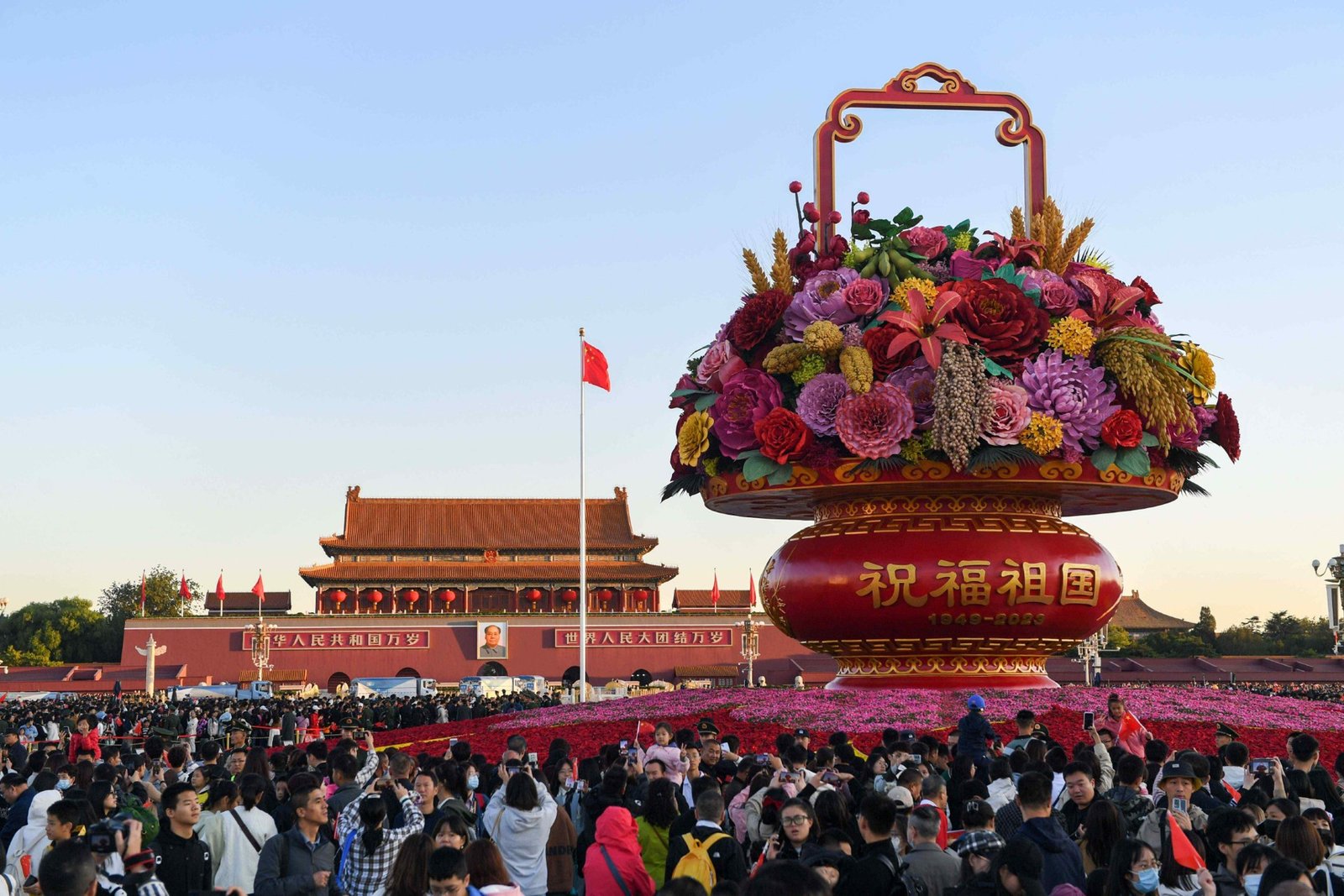
Public spaces may display flags and floral decorations, and many people use the extended time for travel or family visits. Major ceremonies and parades are not annual activities that a visitor can simply expect to attend. There is no one traditional food prescribed nationwide for National Day; meals generally reflect where people gather or travel.
Traditional festivals that do not give everyone a day off
Lantern Festival — 元宵节
The fifteenth day of the first lunar month traditionally rounds off the New Year season. Lantern displays, riddles, and sweet rice balls called tangyuan or yuanxiao are familiar customs. It has no nationwide public holiday, but an evening lantern venue can still be packed.
Qixi — 七夕
On the seventh day of the seventh lunar month, the Cowherd and Weaver Girl story sits alongside older traditions of asking for skill in needlework. Today it is often celebrated romantically. There is no nationwide day off or single mandatory food; restaurants and special events may need reservations.
Double Ninth — 重阳节
The ninth day of the ninth lunar month is associated with climbing to high places, chrysanthemums, and respect for older people. Chongyang cakes appear in some regions. It has no nationwide public holiday, although a local mountain outing or seniors’ event may make a particular venue busy.
| Group-specific observance | Statutory time off for that group |
|---|---|
| Women’s Day — Mar 8 | Half a day for women |
| Youth Day — May 4 | Half a day for eligible young people |
| Children’s Day — Jun 1 | One day for children under 14 |
| Army Day — Aug 1 | Half a day for active-duty military personnel |
These group-specific holidays do not receive a substitute day when they fall on a weekend. They generally do not create a nationwide travel break. Local implementation and access to a particular business still need checking.
Some observances give time off only to specific groups, such as Women’s Day or Children’s Day; some ethnic and regional holidays follow local arrangements. They are not equivalent to the seven nationwide holiday blocks. Check the calendar and local program for your destination instead of treating every festival name as a national closure.
Turn the holiday calendar into a workable itinerary
- Check the official holiday block and adjusted working days for your travel year, then compare your entire route with it—not just the arrival date.
- Book the hardest-to-replace train or flight and confirm hotel cancellation terms. Train tickets are released within a limited advance-sale window; a booking request before release is not an issued ticket. Set a reminder for the service’s actual sale time.
- Check each attraction’s official reservation window, entrance, opening days, and holiday notices. A sold-out reservation is different from a long queue; arriving early does not guarantee admission.
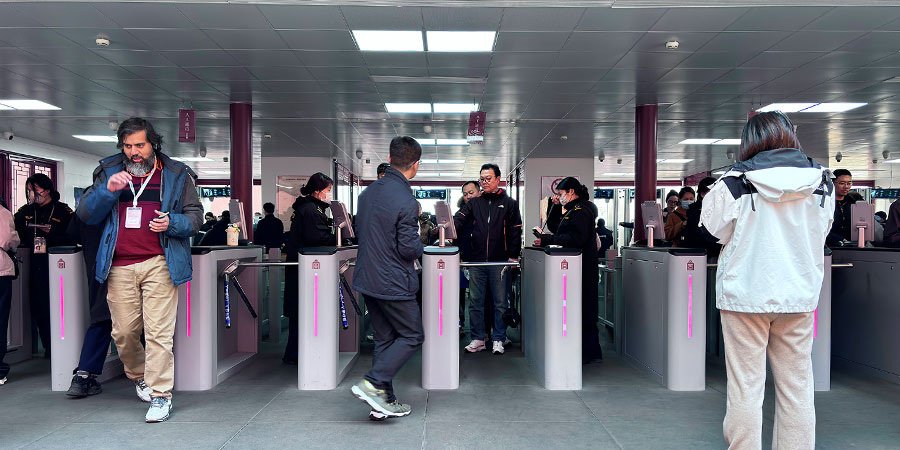
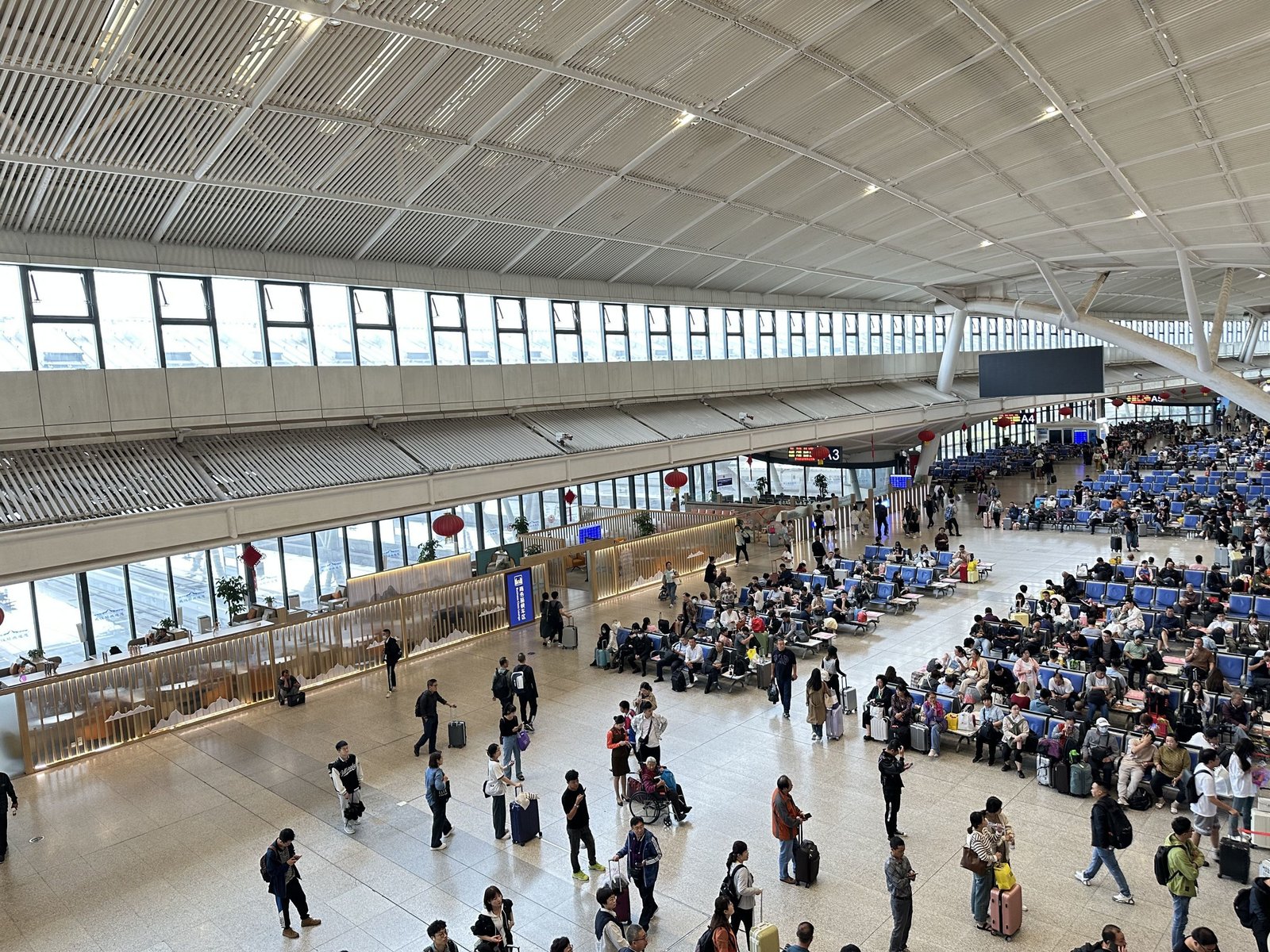
- Allow extra time for security, station access, roads into scenic areas, and the first and last legs of a holiday. Avoid a tight road-to-train connection after a festival event.
- Keep a manageable alternative: one local neighborhood, a smaller museum, or a relaxed meal. Confirm opening hours during Spring Festival in particular. Do not pack the backup day with multiple distant attractions.
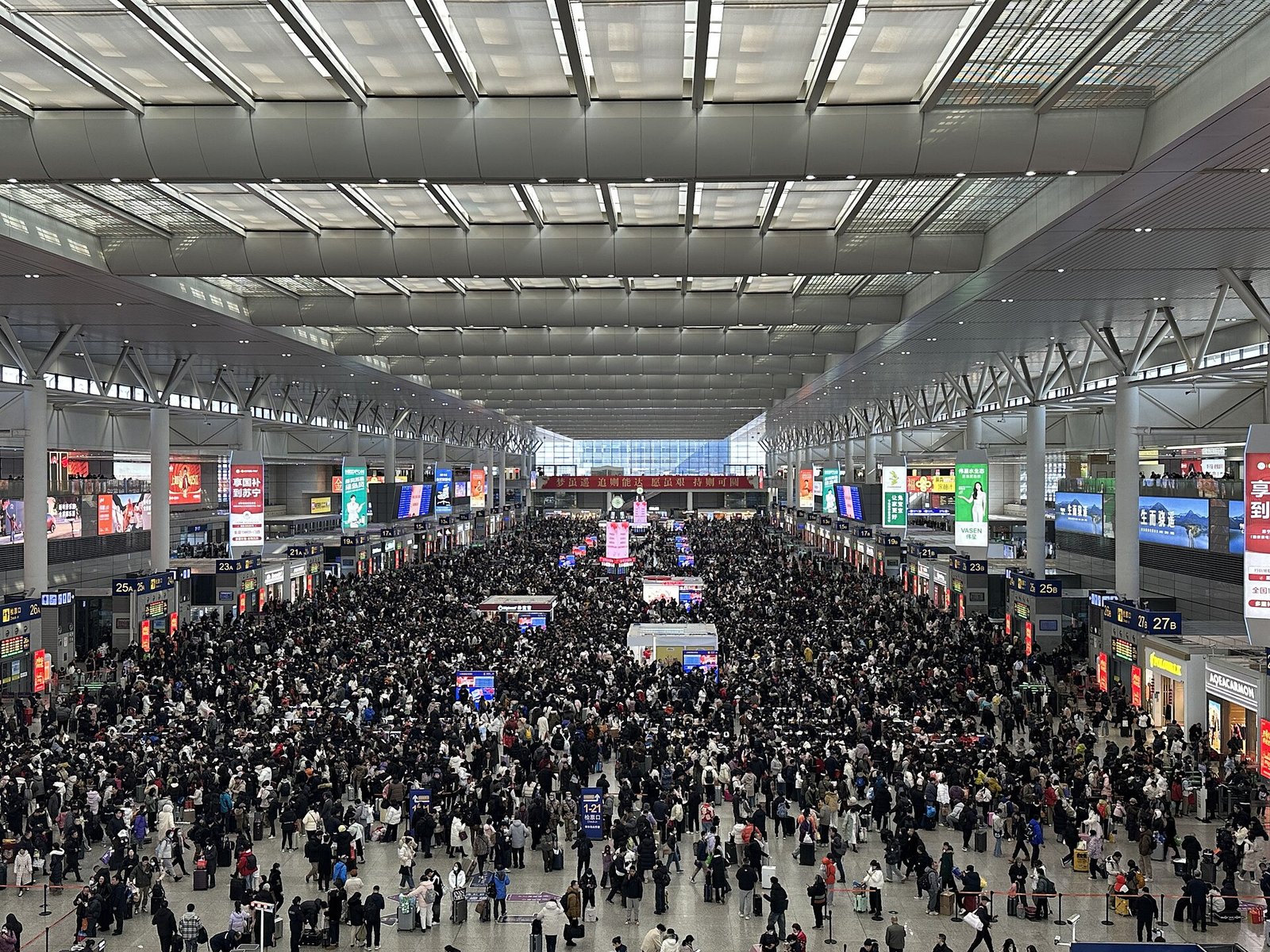
Traveling during a holiday can be rewarding: a seasonal snack, a community race, or a lantern-lit evening may reveal something an ordinary weekday does not. The useful question is where the pressure will be. A quiet business district can coexist with a crowded rail station; a short national break can still overwhelm a single event venue. Choose the celebration you want to experience, then build enough space around it to enjoy it.
Practical guidance reviewed 12 October 2026. Confirm current rules, opening arrangements, and availability with the relevant authority or provider before travel.
← Back to Travel Tips