Culture · Festival energy
Lion Dance
Drums, bright costumes, acrobatics, and blessings bring streets, shops, and courtyards alive during celebrations.
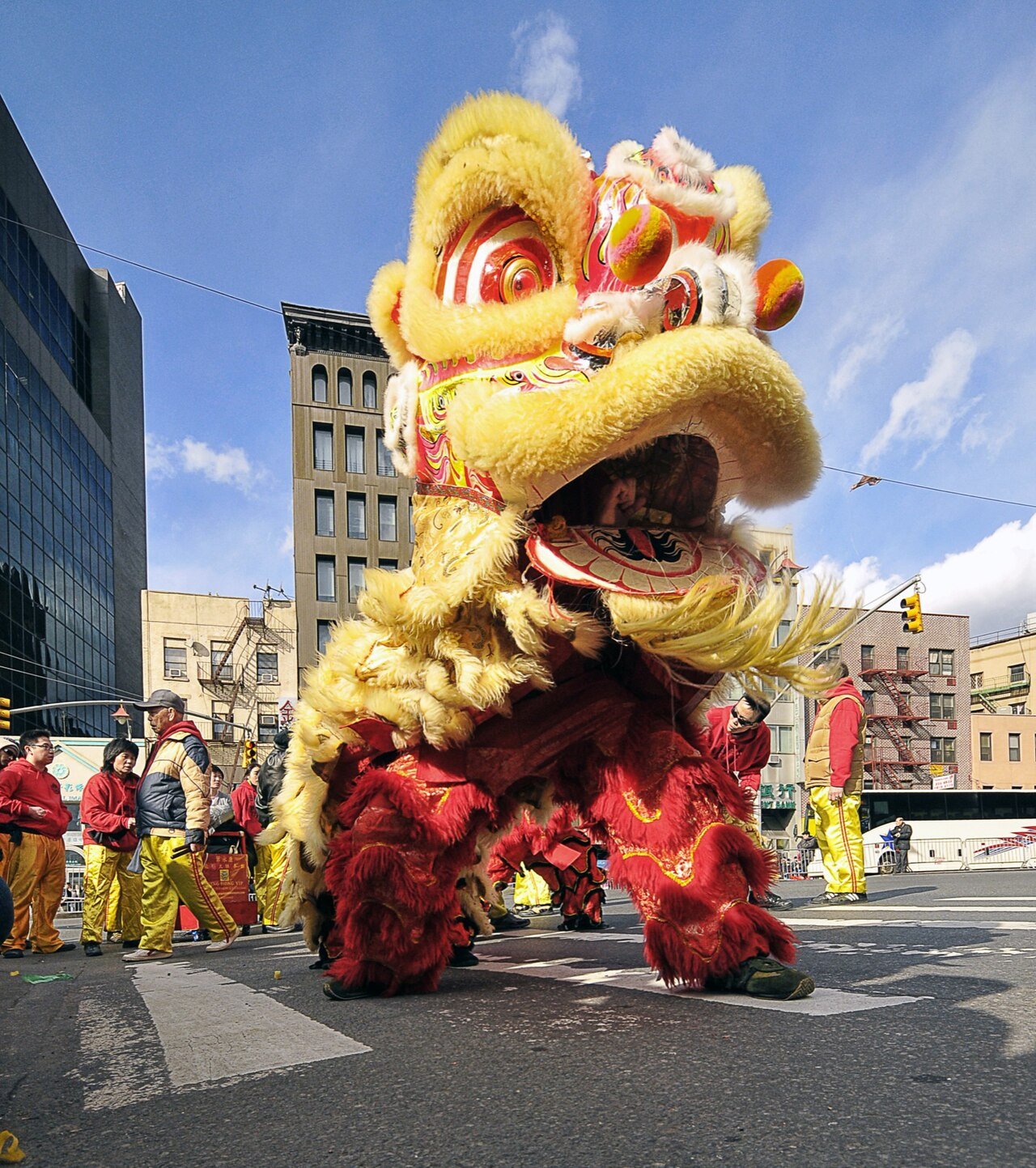
The lion blinks, pauses, and seems to inspect the crowd. That personality is constructed through timing: the head performer and the person beneath the body must coordinate footwork, weight, and rhythm. What looks spontaneous depends on rehearsal and trust.
The drum gives the creature its timing
Notice how drums, cymbals, and gongs shape the creature’s reactions. A greeting, a cautious approach, or a sudden leap can turn movement into a miniature story. Performances may include cai qing, often translated as plucking the greens, with auspicious meanings and locally specific arrangements.
Lion dance is performed at celebrations and community occasions in China and overseas Chinese communities. Northern and southern traditions have different appearances and performance emphases, and individual schools develop their own styles. The southern lion is especially associated with Guangdong and neighboring cultural networks.
The head’s small reactions help establish personality before a difficult movement begins. A blink, hesitation, or turn can make the audience respond to a creature rather than notice only athletes beneath a costume. That expressive work is worth watching even in a routine without high poles.
Watch the routine with room for the performers
Watch from the designated audience area and give the performers room. Pole routines and other acrobatics require clear space and concentration. Ask an organizer about a public demonstration rather than expecting every festival or business opening to include the same routine.
A lion dance differs from a dragon dance, whose long body is usually carried by a larger coordinated team. Neither is simply a costume parade. Learning to follow the drum makes the performance easier to read, even when you do not know the particular school’s vocabulary.