Destinations · Mountain city & night views
Chongqing
Riverfront towers, hillside lanes, Hongyadong lights, the Liziba monorail, and fiery hotpot make Chongqing a city to explore on many levels.
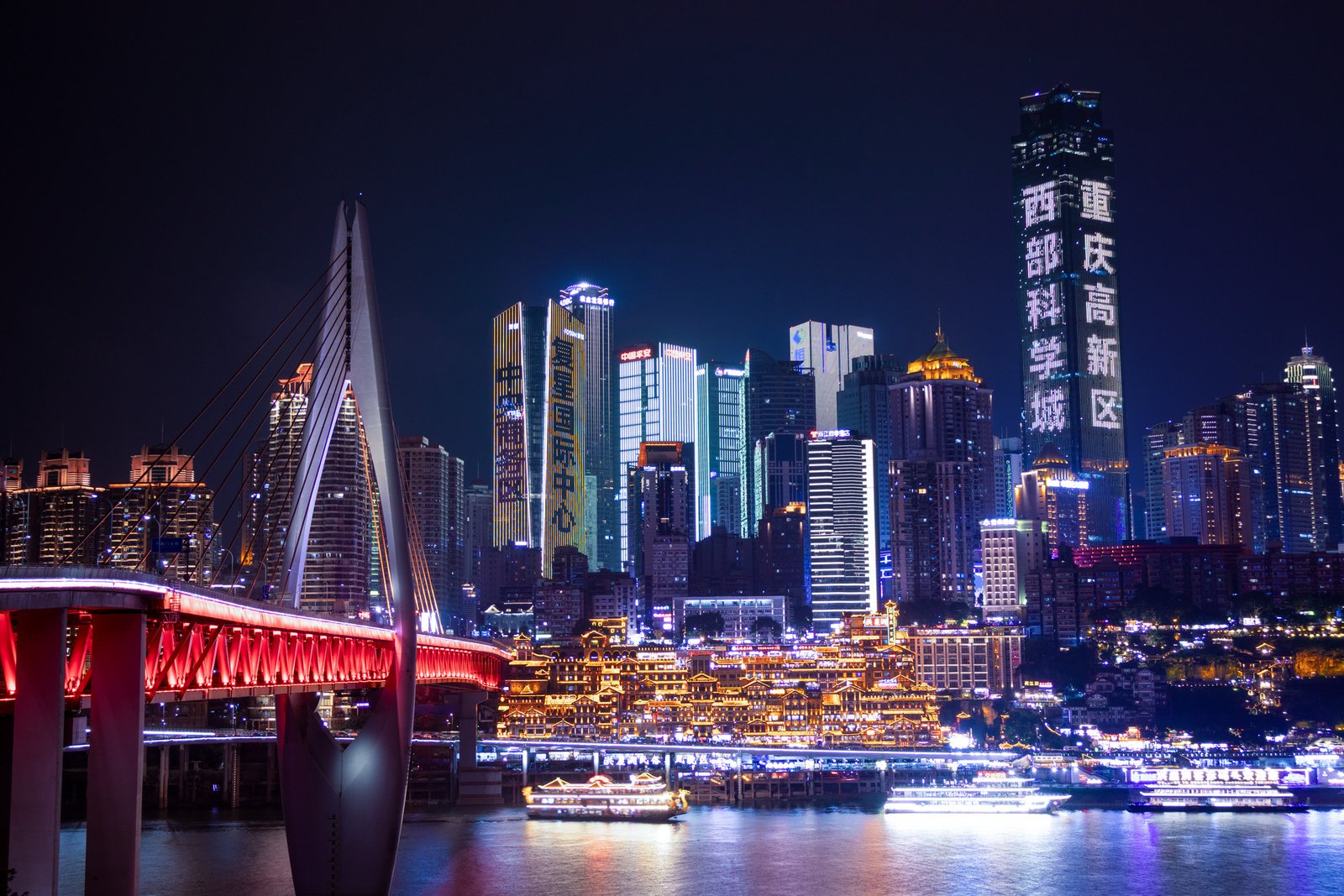
Central Chongqing occupies steep terrain where the Yangtze and Jialing rivers meet. The wider municipality is enormous: Wulong and Dazu are excursions outside the compact central sightseeing area.
A river city understood through its hills
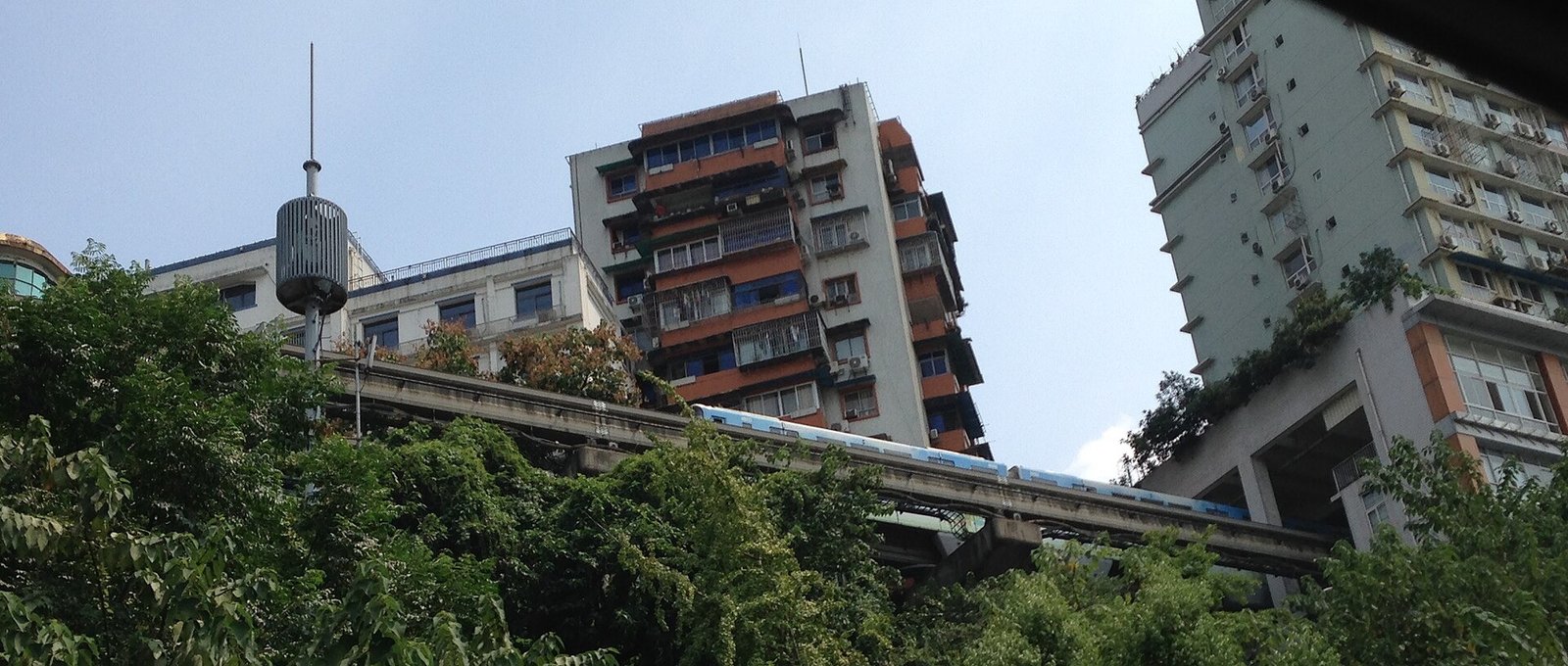
River trade, regional administration, and its wartime role contributed to Chongqing’s history. The city’s layered circulation—bridges, stairs, hillside streets, and rail—makes geography visible in daily life. Modern construction sits above and beside older communities rather than on one flat street grid.
Read the city vertically
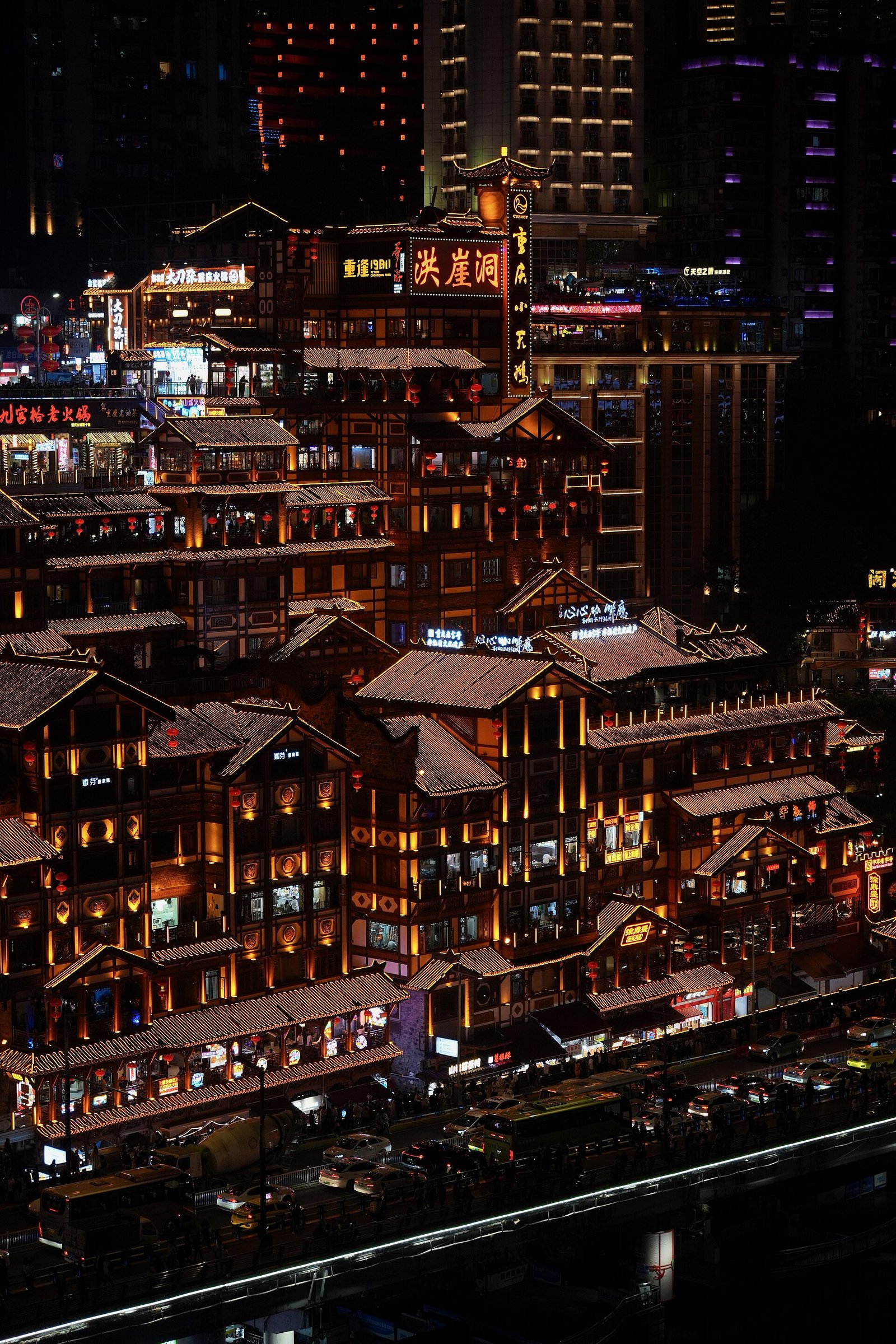
A map’s short line can conceal an elevation change, several levels of roads, or an entrance on the other side of a building. Group a riverfront outing separately from a hillier neighborhood walk. Hongya Cave’s illuminated exterior is a view of a commercial complex, not evidence that every visible structure is an ancient dwelling. Leave time for a hotpot meal, and ask about broth and heat before ordering. Understanding the terrain explains more about Chongqing than trying to reproduce every famous camera angle.
Walk along riverfront viewpoints, explore central streets around Jiefangbei, or visit museums for historical context. Hongyadong’s nighttime scene is a contemporary tourist setting inspired by regional architectural forms. Liziba’s rail view is a short observation stop, not a reason to spend an entire day waiting for the same photograph.
River views with an exit plan
Read the levels and gradients between your hotel, the riverfront, and the next stop. Check which entrance a vehicle can reach and allow time to find the route back.
An evening built around dinner
Reserve or choose a hotpot restaurant with clear prices and broth choices, then add a manageable nearby night view. The meal deserves time rather than serving only as a break between camera locations.
A hotpot meal and a workable evening route
Hotpot is associated with rich, spicy broth and shared cooking, while xiaomian offers a quicker noodle meal. Choose spice levels and ingredients carefully; mixed pots or mild broth may help a group with different preferences. Local food is not limited to the hottest dishes.
Routes should account for elevation, stairs, and the possibility that two points close on a map sit on different levels. Check pickup points carefully. Leave extra time for riverside crowds and set aside a full day if adding Wulong or Dazu.